
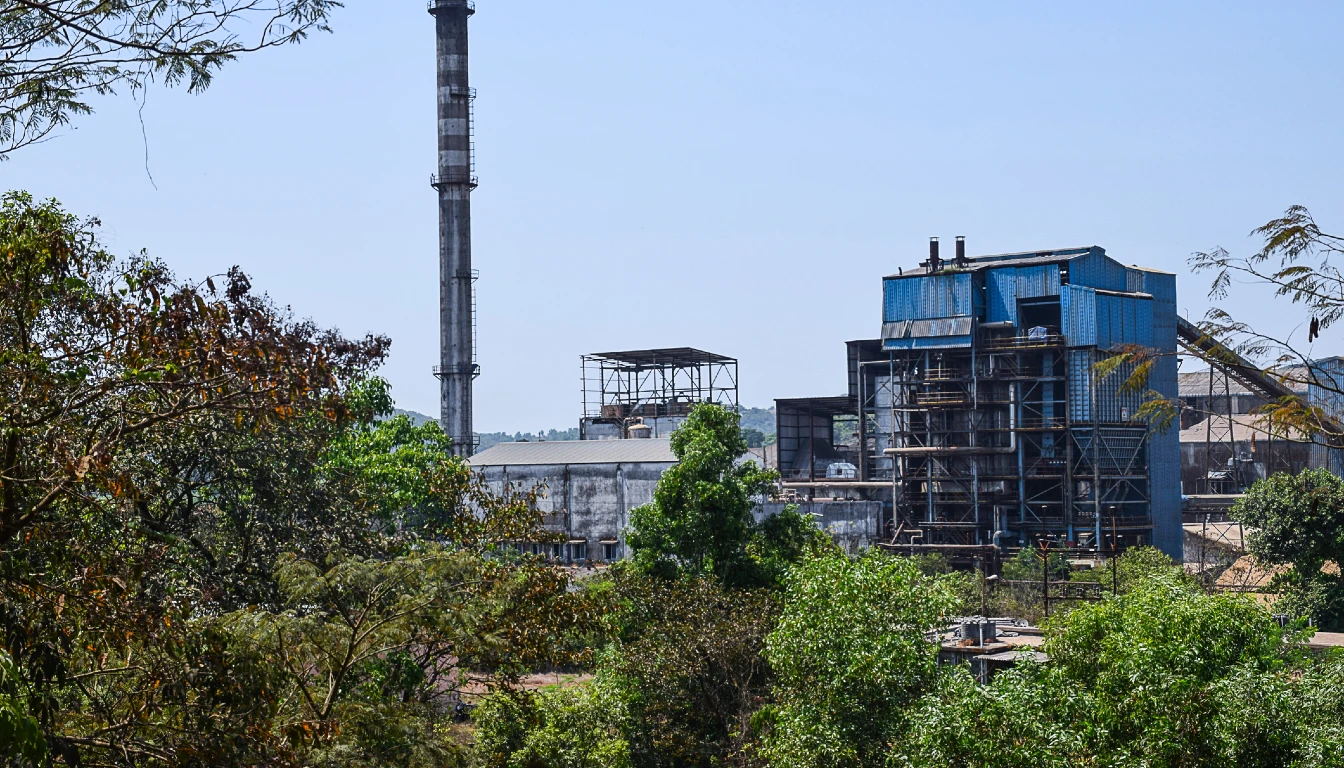
India has announced a $2.1 billion investment in carbon capture and storage targeted at its hardest-to-abate industrial sectors. The commitment marks one of the largest single allocations for carbon capture technology by any emerging economy, and signals a material shift in how India intends to meet its net-zero ambitions without dismantling its industrial base.
Why Heavy Industry Is the Central Challenge
Steel, cement, and chemicals account for a substantial share of India’s industrial emissions. These sectors cannot decarbonise through electrification alone. Carbon capture, utilisation, and storage, known as CCUS, remains one of the few technically viable pathways for reducing process emissions from facilities where combustion is integral to production chemistry.
India’s steel sector alone produces roughly 120 million tonnes of steel annually, with the country targeting 300 million tonnes of capacity by 2030. The overwhelming majority of that output relies on coal-based blast furnace technology. Replacing that infrastructure within a decade is neither economically nor logistically feasible. CCUS offers a route to reduce emissions from existing assets whilst new low-carbon capacity is built out.
The IEA has consistently identified CCUS as essential to achieving net-zero globally, particularly for industrial processes. Its Net Zero by 2050 roadmap projects that carbon capture must sequester over 1.6 billion tonnes of CO2 annually by 2030 to stay on track. Current global capacity sits far below that threshold, making national-level commitments of this scale consequential.
The Policy Architecture Behind the Announcement
India’s investment does not arrive in isolation. The government has been constructing a policy framework around industrial decarbonisation for several years. Its updated Nationally Determined Contribution, submitted under the Paris Agreement, commits India to reducing the emissions intensity of its GDP by 45 per cent from 2005 levels by 2030. Carbon capture investments in heavy industry directly support that intensity-based target.
The funding structure matters as much as the headline figure. If the $2.1 billion flows primarily through public financing mechanisms, it will need to crowd in private capital to achieve meaningful scale. India’s domestic green finance market is growing but remains shallow relative to the investment requirements of industrial decarbonisation. The government’s ability to design bankable project structures will determine whether this commitment translates into operational capture capacity or remains a planning ambition.
International climate finance is also a variable. India has argued consistently at COP negotiations that developed nations must honour their commitments to support emerging economies in deploying costly mitigation technologies. CCUS is expensive. Capture costs for industrial applications typically range from $50 to over $100 per tonne of CO2, depending on the source concentration and geological storage conditions. Without concessional finance or technology transfer, the economics remain challenging for Indian project developers.
Investor and Market Implications
For climate investors, the announcement opens a specific set of opportunities. Engineering, procurement, and construction firms with CCUS project experience will find India a more active market. Equipment suppliers, geological survey companies, and CO2 transport infrastructure developers all stand to benefit if project pipelines materialise.
The announcement also carries implications for India’s emerging carbon market. The country is developing a domestic carbon credit mechanism under its Energy Conservation (Amendment) Act of 2022. Industrial facilities that deploy carbon capture could generate credits within that system, improving project economics and attracting additional private investment. The interaction between CCUS deployment and carbon market design will be a critical variable for project developers to monitor.
Risks remain real. India has announced ambitious clean energy targets before, and execution has sometimes lagged. The country’s geological storage potential for CO2 has not been fully mapped, and regulatory frameworks for subsurface storage rights are still developing. These are not insurmountable obstacles, but they require deliberate policy attention to resolve before large-scale deployment can begin.
What Comes Next
The credibility of this commitment will be tested over the next 24 to 36 months. Concrete project sanctions, regulatory approvals for storage sites, and the mobilisation of private co-investment will serve as the real indicators of progress. India’s industrial decarbonisation trajectory carries global significance. As the world’s third-largest emitter, the pace and method of its industrial transition will shape both global temperature outcomes and the commercial viability of CCUS technology at scale.