Ocean Cleanup Targets Rivers to Halt Global Plastic Pollution. Boyan Slat has a clear theory of change. Stop plastic at the river. The Dutch founder of The Ocean Cleanup argues that intercepting waste before it reaches the sea is the most effective strategy available.
His organisation has spent more than a decade building the technology to prove it. The numbers behind the mission are stark. The Ocean Cleanup estimates that roughly 80 per cent of ocean-bound plastic travels through the 1,000 most polluting rivers worldwide.
The organisation has set two public deadlines. By 2030, it wants to address the major pollution hotspots. By 2040, it plans to stop 90 per cent of floating plastic from entering the sea. Slat has put the total cost of that campaign at under one billion dollars.
How the Interception System Works
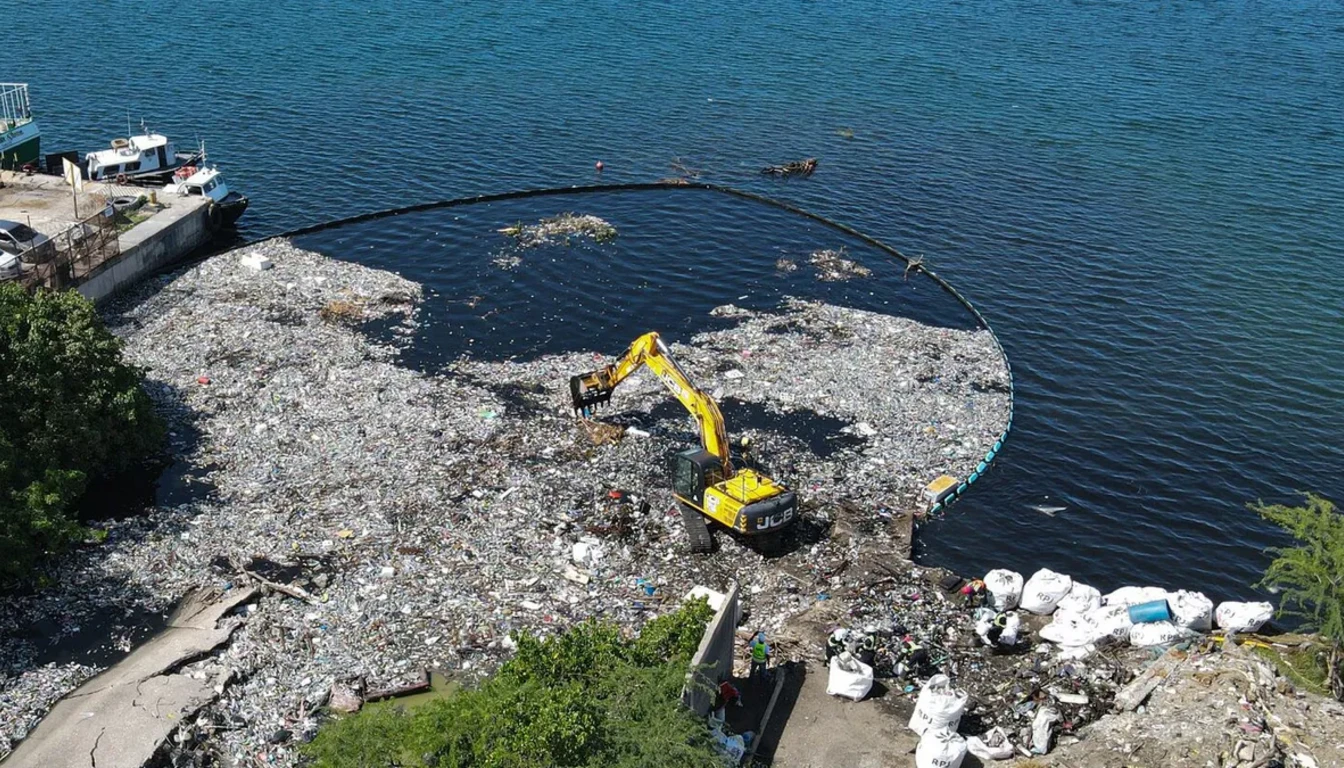
The organisation deploys two main technologies in rivers. The first is floating barriers that collect debris as it travels downstream. The second is autonomous Interceptor vessels that gather waste mechanically. The systems currently operate across Indonesia, India, Colombia, the Philippines, and the Caribbean. The Ocean Cleanup reports removing nearly 50 million kilograms of waste from rivers and oceans to date.
The organisation’s central argument is straightforward. Ocean plastic does not appear suddenly offshore. It arrives through waterways, carried by rainfall, flooding, and inadequate waste infrastructure. Catching it at the river stage is cheaper and more efficient than recovering it from open water. Slat explains that this approach could produce a rare environmental success story. He said the world should be able to look back on a future where ocean plastic was once overwhelming, then solved through action.
The Motagua River: A Case Study in Scale
One river captures the scope of the problem. Slat says Guatemala’s Motagua river sends more plastic into the sea than all 38 OECD member countries combined. Le Monde reported in 2023 that the Motagua carries thousands of tonnes of waste annually. The causes include unregulated dumping and overflow from Guatemala City’s ageing landfill. The damage extends across borders. Honduran fisheries, tourism operations, and local government budgets all bear the cost.
The Motagua has also drawn scientific attention. A December 2025 study by Dutch research institute Deltares examined plastic transport in the Motagua and Escondido rivers. Researchers focused on the use of impact barriers to capture floating debris, particularly during flash floods. The study confirmed both the promise and the difficulty of river interception. Flows are violent. Debris varies significantly in size and density. Systems must perform in rapidly changing conditions.
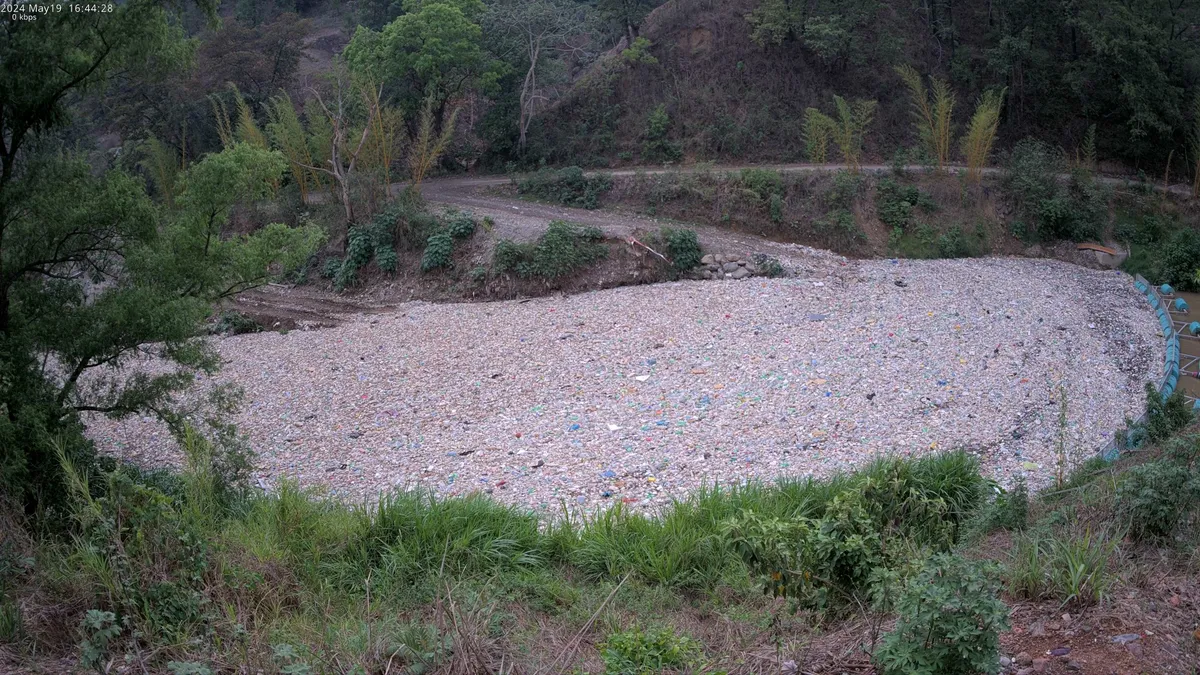
The Ocean Cleanup’s Interceptor 006 in Las Vacas, outside Guatemala City.
What the Evidence Suggests So Far
The Deltares research gives the river-blocking model a degree of technical credibility. It does not, on its own, validate the global targets The Ocean Cleanup has set. Those targets remain ambitious and depend on scaling operations across dozens of countries with different regulatory environments, infrastructure capacities, and political will.
The organisation’s broader strategy divides the problem into two parts. The first is prevention: stopping new plastic from entering the ocean through river interception. The second is remediation: removing legacy waste already circulating in large accumulation zones. The nonprofit continues work on both fronts. Its ocean-cleaning systems have previously operated in the Great Pacific Garbage Patch.
The financial case Slat makes is worth examining. Less than one billion dollars to stop 90 per cent of floating plastic entering the sea by 2040 is a significant claim. For context, the OECD estimated in 2022 that global plastic pollution costs economies hundreds of billions of dollars annually through damage to fisheries, tourism, and health systems. If the cost-benefit relationship holds at scale, the investment case is clear.
The organisation acknowledges that river interception alone cannot solve the full crisis. Waste management infrastructure, policy enforcement, and manufacturing changes all form part of the picture. What The Ocean Cleanup is betting on is that technology deployed at the right points in the right rivers can change the trajectory measurably. The 2030 deadline will provide the first real test of that proposition.