
A breakthrough from Chalmers University of Technology introduces plastic-based nanoparticles capable of generating hydrogen from sunlight without rare and costly platinum, marking a significant step toward sustainable fuel production.
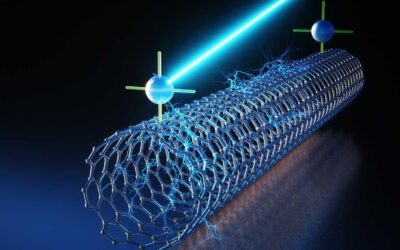
A team led by Chalmers University of Technology in Sweden reports a step forward in producing solar hydrogen without relying on the scarce and costly metal platinum, instead using tiny particles of electrically conductive plastic known as conjugated polymer nanoparticles. According to the report by OilGasDaily, the particles, when dispersed in water, absorb light and drive hydrogen evolution under simulated sunlight, producing visible streams of hydrogen bubbles in a laboratory reactor and generating about 30 litres of hydrogen per hour from one gram of polymer under those conditions.
The work builds on a detailed study from Chalmers published in 2025 that designs low‑cost conjugated polymers around the dibenzothiophene‑S,S‑sulfoxide (BTSO) unit. According to that study, the polymers self‑assemble into water‑dispersible nanoparticles and achieved a hydrogen evolution rate of 209 mmol g⁻¹ h⁻¹, with performance strongly influenced by side‑chain engineering, nanoparticle morphology and solution pH. The PubMed index of the Chalmers paper corroborates those figures and emphasises a clear correlation between high efficiencies and the number of BTSO units in the polymer backbone.
Researchers say the crucial advance is molecular‑level design that makes the polymer chains more hydrophilic and loosely packed inside the nanoparticles, enhancing interactions with water and improving the light‑to‑hydrogen conversion process. “Developing efficient photocatalysts without platinum has been a long-standing dream in this field. By applying advanced materials design to our conducting-plastic particles, we can produce hydrogen efficiently and sustainably without platinum – at radically lower cost, and with performance that can even surpass platinum-based systems”, says Holmes, joint first author, as reported in the OilGasDaily piece.
The Chalmers team highlights several practical advantages beyond metal avoidance: the conjugated polymers can be synthesised via more benign routes and at lower cost, reducing environmental and geopolitical risks tied to platinum mining and refining. The project is also consistent with broader European and academic efforts to understand how nanoscale morphology and self‑assembly govern photocatalytic activity. The Chemical Communications literature in 2025 argues that self‑assembly, metalation and peripheral modifications can independently or synergistically tune catalytic performance, and that recyclability and reconfiguration will be important for practical deployment. The EU‑funded PolyNanoCat project similarly seeks to correlate nanoparticle photophysics with photocatalytic activity, underlining a community interest in structure–function relationships for organic photocatalysts.
Despite the laboratory promise, the Chalmers researchers acknowledge remaining obstacles before practical, additive‑free solar hydrogen. In current experiments a sacrificial electron donor, vitamin C, prevents reaction stalling and enables the high hydrogen evolution rates; it is not a sustainable reagent for large‑scale operation. “Removing the need for platinum in this system is an important step towards sustainable hydrogen production for society. Now we are starting to explore materials and strategies aimed at achieving overall water splitting without additives. That will need a few more years, but we believe we are on the right track”, says research leader Ergang Wang, professor at the Department of Chemistry and Chemical Engineering at Chalmers, quoted in the OilGasDaily report.
Historical and comparative context highlights the significance and limits of the advance. Earlier approaches have coupled biological photosystems or inorganic photocatalysts with platinum to obtain high and long‑lived hydrogen yields; for example, a 2009 Nature Nanotechnology study combined photosystem I and platinum catalysts to sustain hydrogen production for months in vitro. The current polymer strategy seeks to match or exceed such performance while avoiding precious metals, but it must still demonstrate stable, long‑term operation and the ability to split water into hydrogen and oxygen without sacrificial agents.
The Chalmers work is collaborative and internationally supported: the project involved researchers from Sweden, Brazil, China and the United States and received funding from the Swedish Research Council, Formas, the Swedish Energy Agency and the Wallenberg Foundations, according to the OilGasDaily release. Uppsala University work on composite polymer dots and other groups’ efforts on polymer‑based photocatalysts provide complementary pathways for improving light absorption and catalytic stability.
Industry data and research roadmaps indicate that to move from laboratory reactors to commercial systems the field must show sustained activity under real sunlight, robust catalyst recyclability, and overall water‑splitting without external reagents. The Chalmers results mark a persuasive materials advance toward those goals: by tailoring conjugated polymers for water compatibility and efficient self‑assembly, the researchers have put an alternative to platinum‑based photocatalysts on a firmer experimental footing. Whether that promise translates into scalable, field‑deployed solar hydrogen will depend on solving the remaining challenges of additive‑free operation, long‑term catalyst stability and integration into practical devices.