Peatlands are one of the planet’s most important, and least understood, ecosystems. At first glance, their restoration can look like the most un-technological activity imaginable, involving water-saturated bogs, moss and heavy machinery. Yet increasingly, advanced digital tools sit behind how these landscapes are mapped, restored and monitored.
Formed over millennia from partially decomposed vegetation locked in waterlogged conditions, peatlands store extraordinary amounts of carbon in a relatively small area. As Freddie Ingleby, Managing Director of Caledonian Climate, explains, peatlands are made up of vegetation that “hasn’t fully decomposed, it’s actually just compressed in a waterlogged state. And so the carbon is locked into the soil itself”.
That slow process makes peat a uniquely high-density carbon store. Globally, peatlands hold more carbon than all the world’s forests combined, a fact that remains poorly appreciated outside specialist circles and widely cited by bodies such as the UN Environment Programme.
When left intact, peatlands act as long-term carbon sinks. When damaged or drained, they can become major sources of emissions. Understanding that distinction, and acting on it at scale, is now emerging as a critical part of climate mitigation.
Why peatlands matter globally and in Scotland
Peatlands occur across large parts of the Northern Hemisphere, including Canada, Russia and northern Europe, as well as in tropical regions such as Southeast Asia. In the UK, and especially in Scotland, they dominate vast upland landscapes. “Scotland in itself and the UK are uniquely positioned with this upland raised blanket bog that we have,” Ingleby says. “The Flow Country and Lewis are the two largest homogenous peatland habitats there are.”
The Flow Country’s global significance was recognised in 2024, when it became the world’s first peatland-based UNESCO World Heritage Site, marking a milestone for nature-based climate protection. For Ingleby, that status reflects both its ecological value and the scale of the climate challenge. “Globally significant and a real challenge from an emissions perspective as well,” he says.
Peat forms extremely slowly, typically at a rate of around one millimetre a year. That makes the carbon stored within it effectively irreplaceable within climate timescales. “The carbon that’s locked away is super important as well in that it’s called an irrecoverable carbon,” Ingleby explains. “If you’ve lost the emissions from peatlands or lost the carbon from peatlands, you can’t recover that carbon into peatlands before a net zero state. It’s gone forever because it takes so long to get locked back in.”
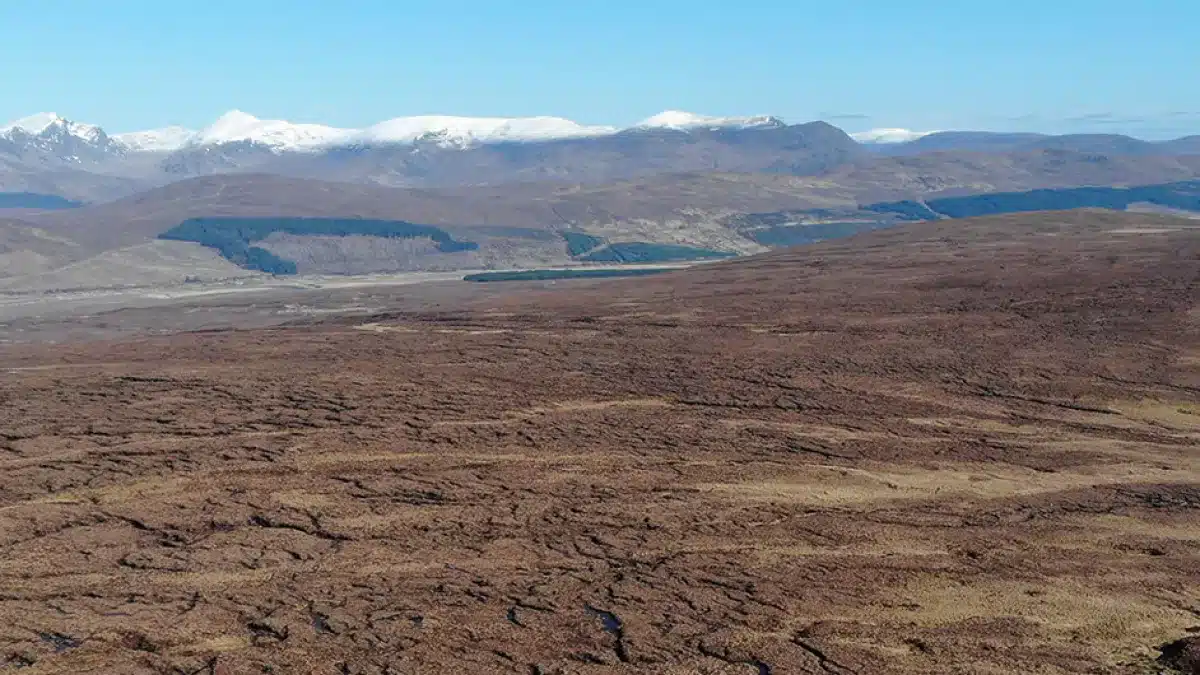
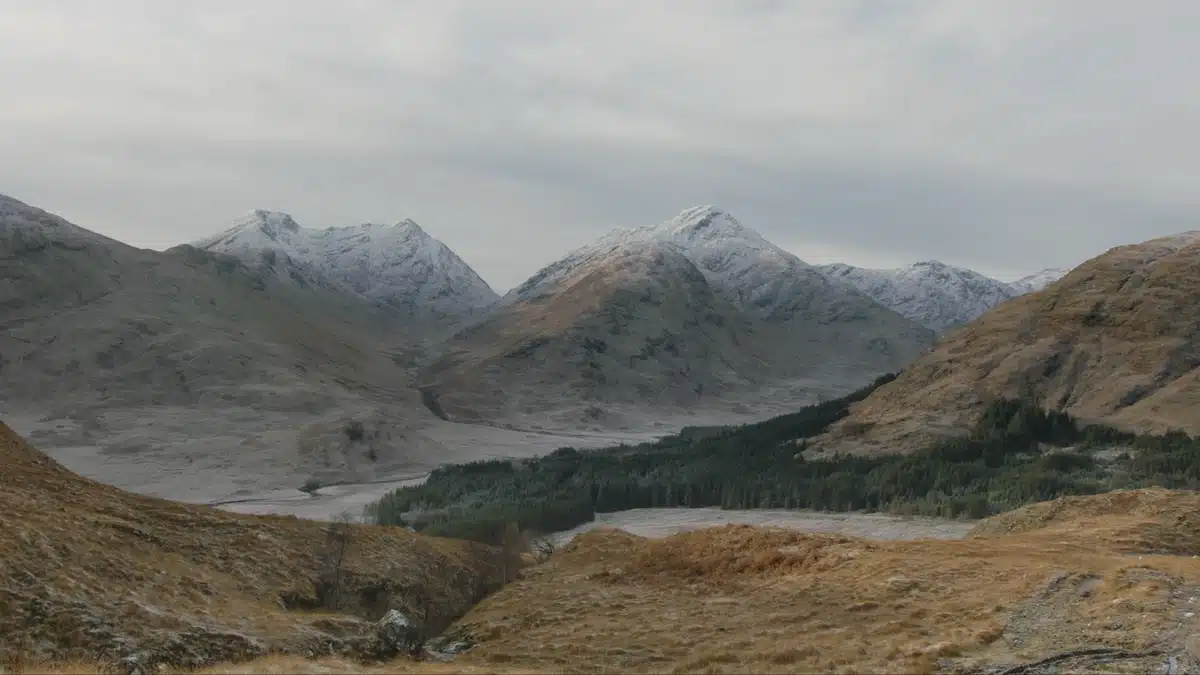
Scotland boasts large amounts of peatland.
When carbon stores become carbon sources
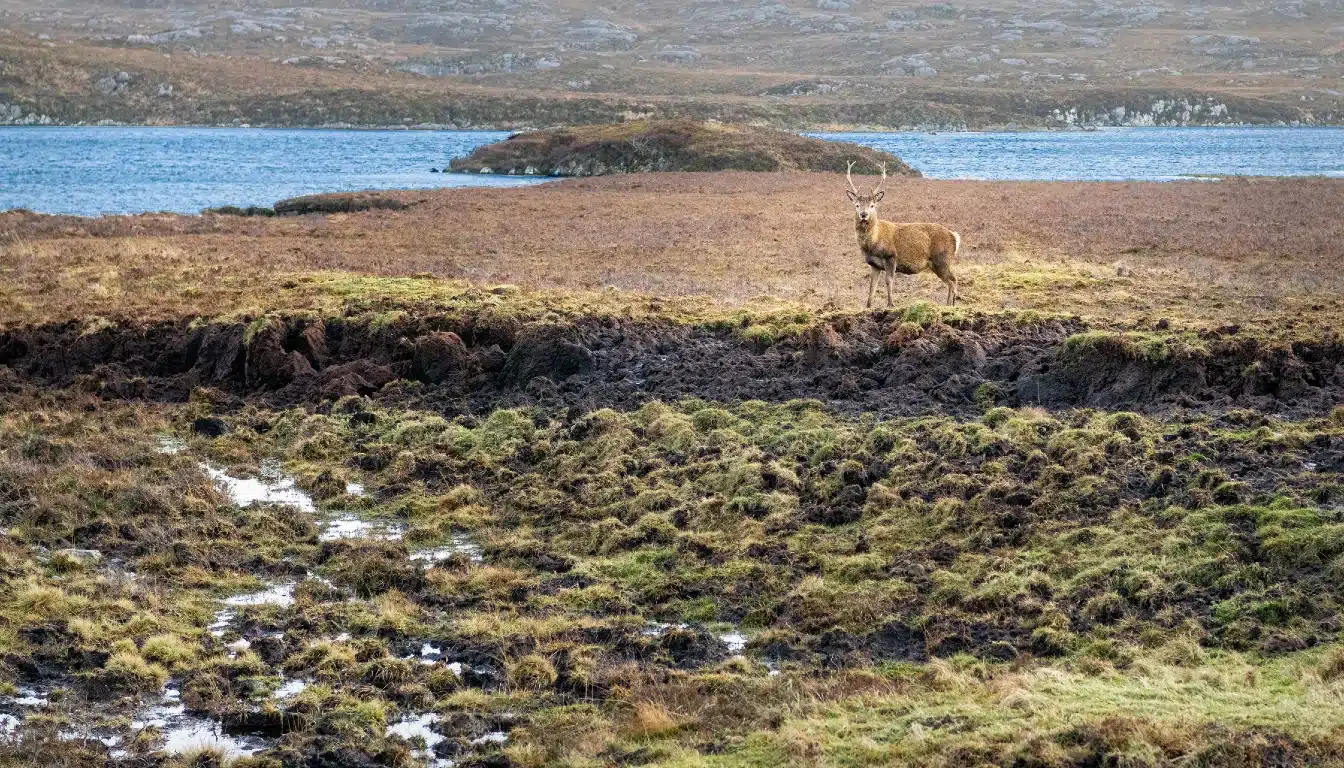
Much of the degradation seen today is the result of human intervention. In temperate regions, peatlands were drained to increase agricultural productivity or planted with commercial forestry. Drainage introduces oxygen into the peat, accelerating decomposition and releasing carbon dioxide. What was once a sink becomes a persistent emissions source.
This dynamic explains why peatland protection and restoration are increasingly seen as low‑regret climate actions by policymakers and climate scientists. Preventing further loss avoids emissions that cannot realistically be reabsorbed elsewhere within net zero timeframes.
Prefer to listen to an audio version of the intverview with Freddie Ingleby? Listen here or search for Climate Solutions News on Spotify, Apple Podcasts or Amazon Music.
Scaling restoration through Caledonian Climate
Caledonian Climate was founded in 2021 to increase the pace of peatland restoration in Scotland. “Our mission is to increase the speed and scale of high integrity peatland restoration taking place,” Ingleby says. The company delivers projects end to end, from initial landowner engagement through to long-term monitoring.
The scale has grown rapidly. “By the end of this restoration season that we’re in at the moment, we will have restored 10,000 hectares,” he says. “Last year we represented about 20 to 25 percent of all of the publicly supported peatland restoration works taking place in Scotland.”
Projects are developed under the UK Peatland Code, an independent standard designed to ensure environmental integrity. Outcomes extend beyond emissions alone. “That intended outcome is also multifaceted,” Ingleby says. “The emission reduction, the biodiversity uplift, the water retention and security.”
Across Caledonian Climate’s existing portfolio, those outcomes are substantial. “There’s going to be over 2.1 million tonnes of carbon dioxide equivalent reductions taking place between now and the end of those projects’ duration,” Ingleby says. Individual projects run for between 30 and 100 years, depending on peat depth, reflecting how long emissions would otherwise have continued.
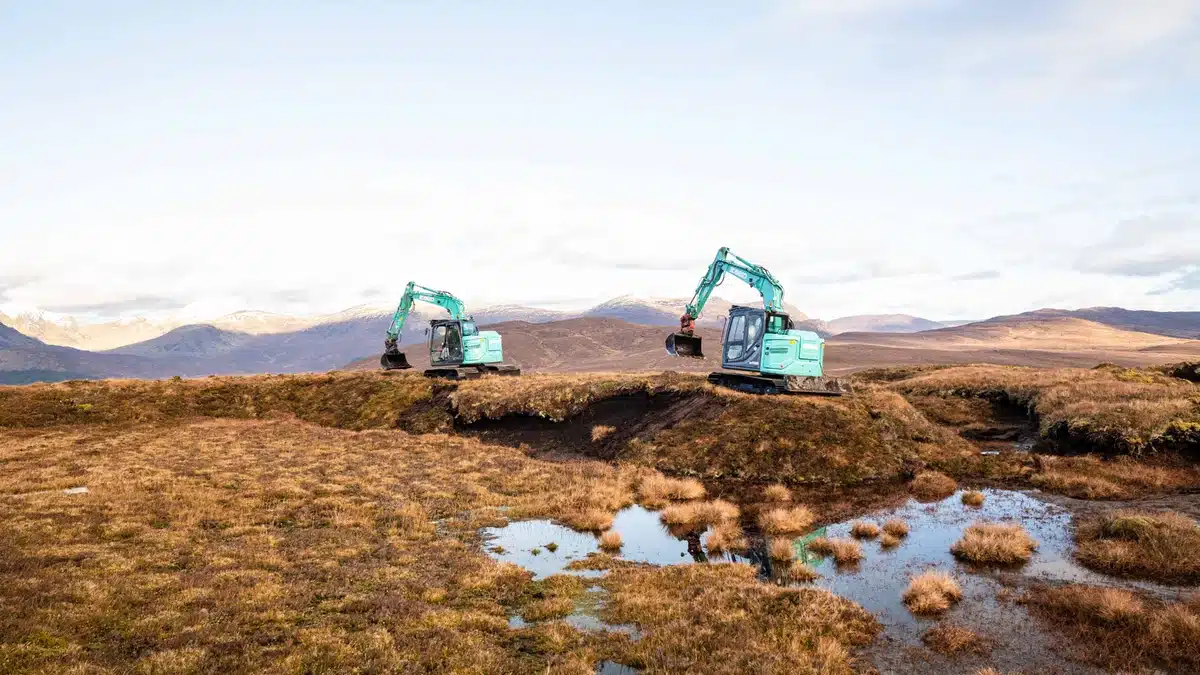
Diggers involved in the restoration can give the appearance of doing “trauma surgery”, but it’s a necessary part of the process.
What restoration looks like on the ground
Peatland restoration is both technical and highly visible. Work often begins more than a year before physical intervention. “It’s really important to understand what you’re working with first,” Ingleby says. Teams survey peat depth, erosion features, biodiversity and hydrology to create a detailed baseline.
The intervention phase can appear dramatic. “You put diggers up on the ground,” Ingleby says. “It’s kind of like a trauma surgery. It’s quite invasive at the first instance.” The goal is to reshape eroded peat banks, re-vegetate bare peat, and re-wet the landscape by slowing water flow.
The ecological response can be rapid. “Almost immediately afterwards you have pools recovering,” he says. “You see the vegetation taking root and covering up like a carpet almost, and it has a really positive impact straight away.”
In more sensitive areas, restoration relies on manual techniques. “You’re trying to give nature a wee bit of a helping hand on its road to recovery,” Ingleby adds.
The growing role of technology
Despite its physical nature, peatland restoration is increasingly underpinned by digital tools. “The sector is evolving really quickly when it comes to technology,” Ingleby says. Geographic information systems remain central, but newer approaches are improving both planning and monitoring.
Caledonian Climate has partnered with an AI specialist to develop a tool focused on erosion mapping and restoration design. “Our focus on that is at the front end, around the erosion mapping and restoration planning of a project to increase the accuracy of feature mapping and determine the most effective interventions,” Ingleby says.
Monitoring is also changing. Digital monitoring, reporting and verification, or DMRV, aims to increase how frequently conditions are assessed. “If you’re just putting people on the ground to walk around, you probably won’t do it every week,” he says. “Some of these DMRV capabilities mean that the cadence of monitoring can go up quite significantly, and that increases investor confidence in projects.”
Corporate finance and landowner incentives
Private capital is beginning to play a larger role. In late 2025, Caledonian Climate announced a five-year, £5 million peatland restoration programme backed by Diageo. Ingleby describes it as “secured funding for peatland restoration at a level that just hasn’t been committed to by others to date, other than the public purse”.
For landowners, motivations vary. “When you see the change and the impact,” Ingleby says, “the transformation is something that really does motivate quite a lot of landholders.” Carbon revenues, biodiversity gains and water management benefits all factor into decisions.
Peatlands may lack the visual appeal of forests. As Ingleby notes, “there aren’t many people that have beautiful memories of walking across bogs”. Yet as climate solutions go, restoring them may be among the most effective available. The challenge now is ensuring technology, finance and policy align fast enough to protect what remains.