COP30 in Brazil closed under a cloud of disappointment. Negotiators sidestepped tougher targets and shifted the agenda towards adaptation, signalling an acceptance that the world is likely to overshoot the 1.5C target (above pre-industrial averages). Yet within this muted landscape, one sector made its strongest showing to date. Direct air capture (DAC) moved from niche experiment to central talking point, with a dedicated pavilion, packed events and unusual political clarity.
“This was the COP where carbon dioxide removals came of age,” says Tom Rollason, Head of Policy and Partnerships at Mission Zero Technologies. “There was a growing consensus that engineered removals are essential, not optional, and need to be part of national plans now rather than something we deal with in the distant future.”
That shift created a rare bright spot. Governments may have avoided major breakthroughs on emissions cuts, but the summit underscored a reality that is shaping climate policy across multiple jurisdictions: any credible route back to climate stability will require large-scale, durable removals.
What is Mission Zero building?
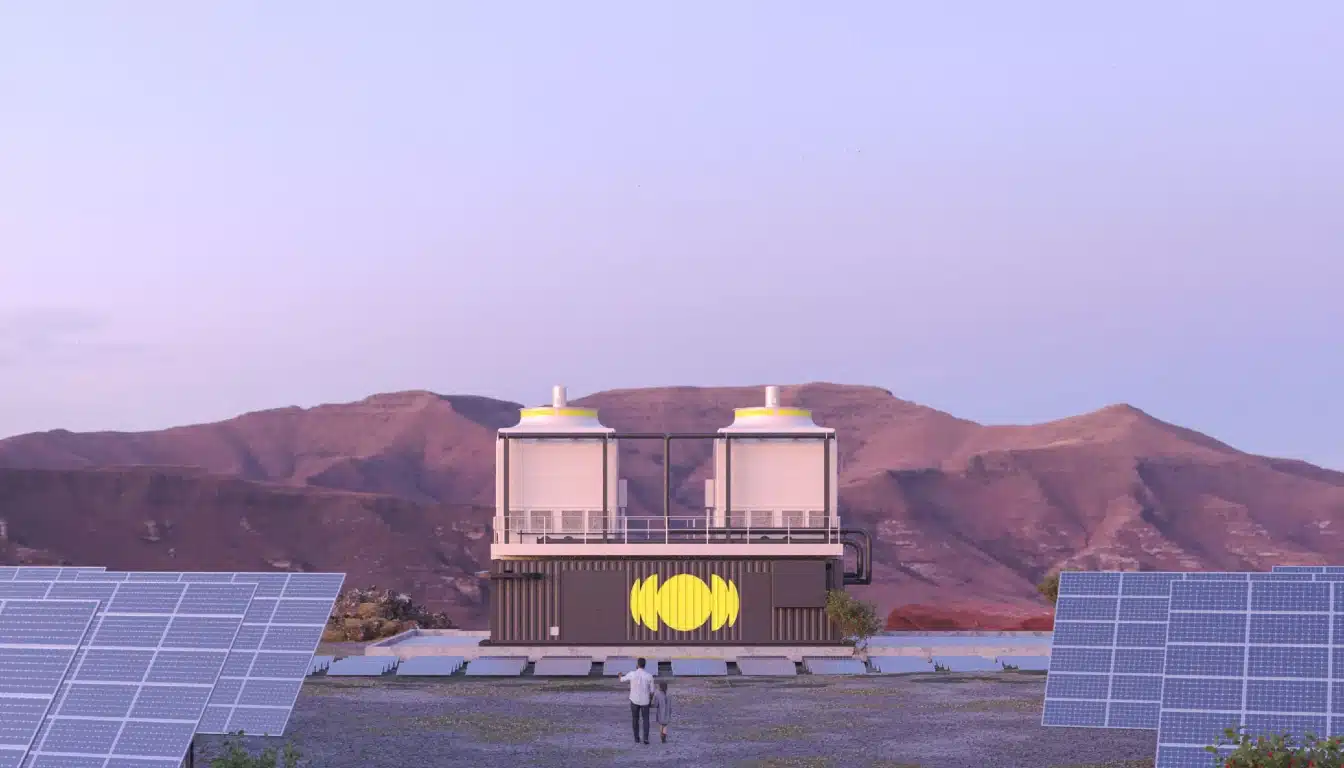
Mission Zero, a five-year-old UK company, is developing an electrochemical approach to direct air capture. Its system uses fans to draw in air, dissolves CO2 into a liquid solvent, then releases it using an electrodialysis membrane. “We make what I call a ‘fizzy drink that doesn’t fizz’,” Rollason explains. “The solvent absorbs the CO2, we separate it through the membrane, and we get a gas stream that’s 97 to 98 percent pure.”
The solvent loops continuously, reducing waste and improving efficiency. The company argues that its process uses significantly less energy than high-temperature thermal DAC systems, particularly during the release phase, which is the most energy-intensive.
Mission Zero now operates three pilot plants: a 50-tonne-per-year system in Sheffield; a 250-tonne system in Norfolk supplying captured CO2 for carbon-negative building aggregates; and a similar-sized plant in Alberta. The Canadian site marks what Rollason calls “the first time CO2 taken directly from the air has been durably stored underground in North America.” The company’s next-generation unit is expected to be four to five times larger.
Are costs falling fast enough?
Cost remains the defining challenge for DAC. Rollason says the company is making tangible progress. “Each deployment brings cost improvements. We’ve seen a 17 percent learning rate across capital costs and around a 60 percent reduction in overall costs across our first three plants. We get cheaper and faster every time we build.”
Even so, energy availability and price remain limiting factors. The need for low-cost renewable electricity, without drawing from existing grid supply, raises barriers for early deployment. “We need abundant renewable electricity. That’s the same for every climate tech sector, but direct air capture is no exception,” he says.
Customers remain cautious. Many are still running pilots or waiting for more operational data before committing to long-term offtakes. Rollason expects insurers and financial institutions to play an expanding role. “They’re starting to adapt long-standing risk products for engineered removals. That will make a real difference.”
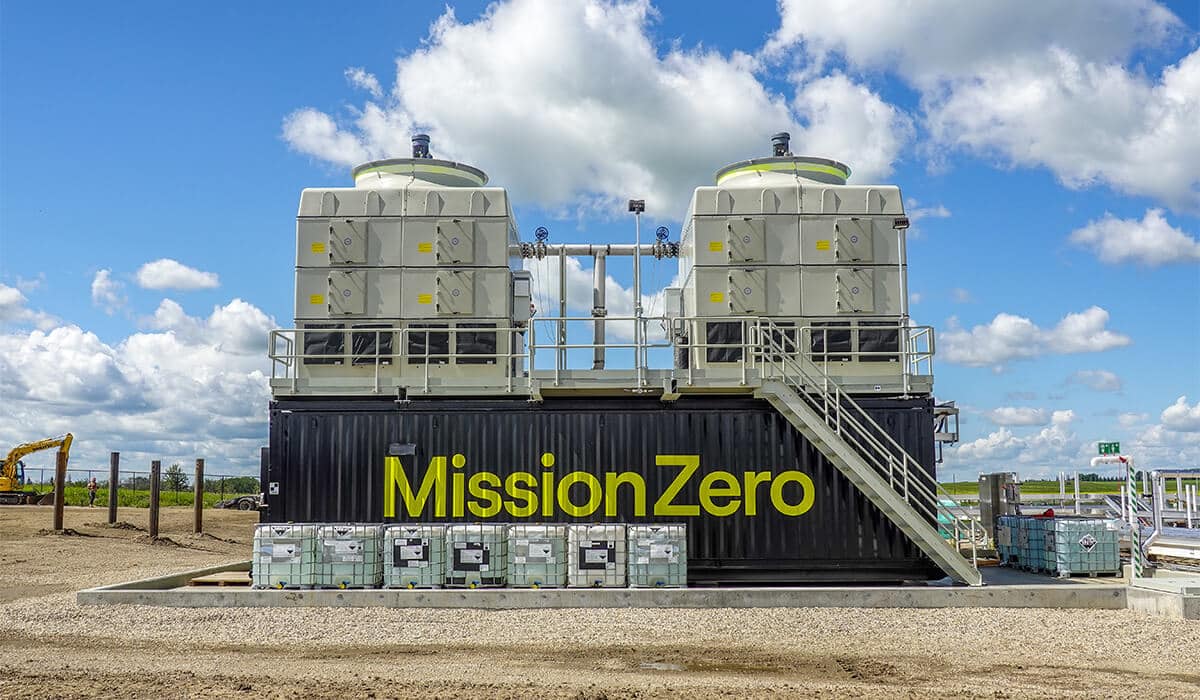
The Mission Zero installation at Deep Sky in Canada.
How did COP30 shift the policy landscape?
COP30 produced few headline commitments, yet Rollason left more optimistic about the policy trajectory for removals. The UN process now recognises the need to remove more CO2 than ever before, especially as overshoot becomes likely. A new High-Level Action Champion for removals, Chris Neidl, adds further momentum.
Progress varies country by country. The US still offers tax credits through 45Q, though wider regulatory uncertainty tempers investor confidence. Canada extended its investment tax credit for removals to 2035 at full value. “That’s doubling down,” Rollason says. “It’s a clear signal that Canada wants to lead.”
The UK continues to build a market-based framework. This includes integrating greenhouse gas removals into the UK Emissions Trading Scheme and creating a removal business model tied to industrial clusters. Full implementation is expected near the end of the decade. The challenge is the gap between now and 2028–29.
“Companies need support to move from pilots to commercial scale,” Rollason says. “Blended finance can bridge that period. We learn by doing, and we need mechanisms that help first movers deploy even when the market isn’t fully built.”

COP30 President Andre Correa do Lago during closing plenary meeting of the 30th Conference of the Parties (COP30). DAC was higher profile than ever at this COP. Photo by Ueslei Marcelino/COP30
Fact box: What technologies are used in direct air capture?
- Liquid solvent systems using alkaline solutions or electrochemical separation, with CO₂ released through heat or electricity.
- Solid sorbent systems using amine‑functionalised or metal‑organic materials that bind CO₂ at low temperatures and release it through heating or pressure changes.
- Mineralisation‑based systems that accelerate natural reactions between CO₂ and reactive minerals to create stable carbonates.
- Hybrid systems that combine solvent and sorbent stages for improved cycling rates or lower energy requirements.
- Emerging processes experimenting with moisture‑swing sorbents, electro‑swing materials and catalytic pathways.
What about Breakthrough Energy pulling back?
Rollason previously worked at Breakthrough Energy, which recently wound down its programme-based policy work. Some commentators interpreted this as retrenchment. Rollason disagrees. “It’s a mischaracterisation. Breakthrough Energy Ventures is still investing in climate tech. They launched a new sustainable aviation fuel fund in September,” he says. “The policy and advocacy work ended because there are now other organisations that can carry that forward. That’s a sign of a more diverse ecosystem, not withdrawal from climate action.”
What comes next?
Despite political turbulence, Rollason believes the direction is clear. “Several countries are building long-term markets for removals. The technical progress across the sector is significant. We’re optimistic,” he says.
Mission Zero’s priorities now include scaling their next-generation module, strengthening energy efficiency, expanding real-world deployments and building a deeper operational track record. “Case studies matter. When you can show reliable, verified removals at real sites, you build confidence with governments and buyers. That’s how the market matures.”
Direct air capture is still far from gigaton scale. Yet after COP30, it is also far from the margins. As governments confront overshoot and adaptation, engineered removals are becoming a central pillar of long-term climate strategy.
What is the market outlook for DAC over the next decade?
- Global installed DAC capacity is expected to rise from under 20,000 tonnes per year today to more than 500,000 tonnes by 2030, driven by early commercial deployments.
- Government‑backed incentives such as the US 45Q tax credit and Canada’s removal investment tax credit are forecast to support more than 5 million tonnes per year of capacity by the mid‑2030s.
- Private and public investment in DAC and engineered removals has grown to several billion dollars annually, with projected cumulative investment exceeding USD 20–30 billion by 2035.
- Compliance markets in Europe, North America and parts of Asia are expected to adopt durable removals, creating steady demand beyond the voluntary market.
- Forecasts suggest DAC could remove 10–60 million tonnes of CO₂ annually by the mid‑2030s, depending on electricity prices, permitting, supply chains and policy stability.