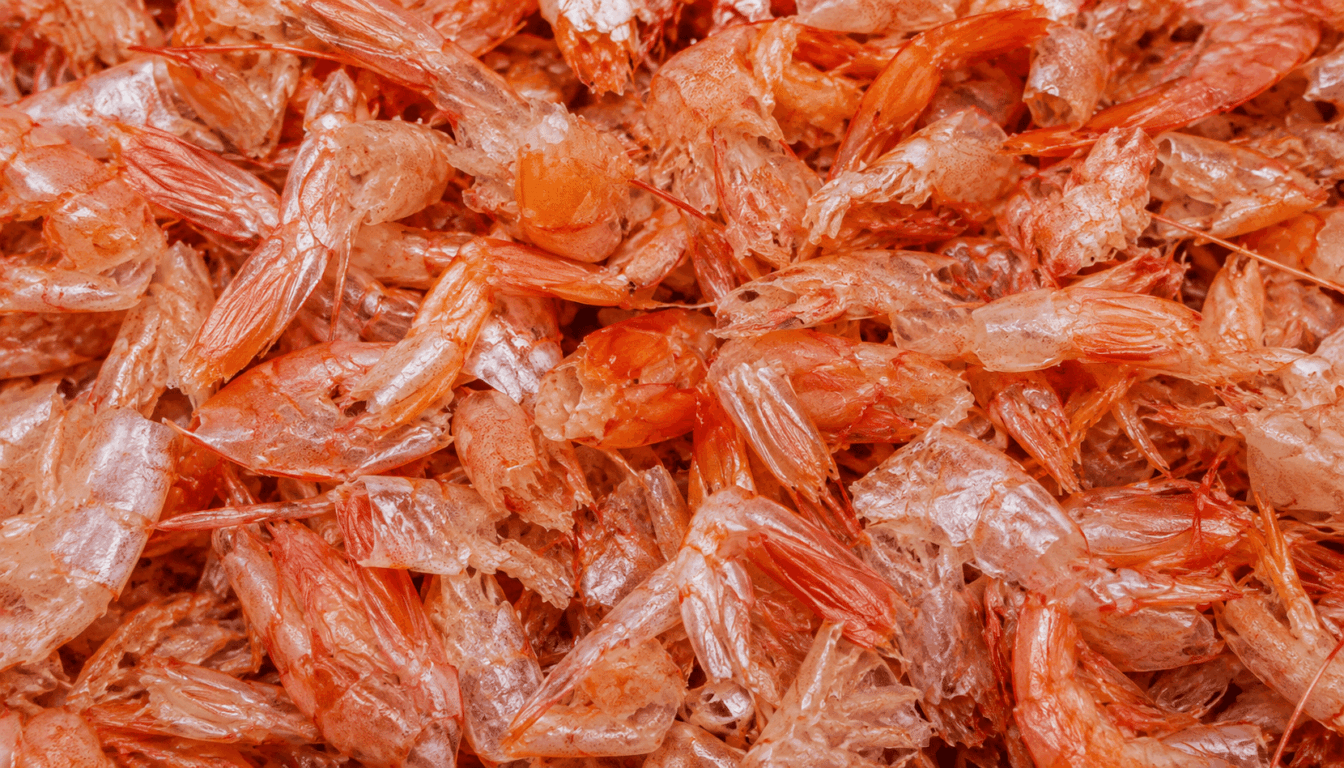
Engineers at Nanyang Technological University in Singapore have developed a multistage process that converts shrimp shell waste into hydrogen, cultured protein, and calcium carbonate. The research, described in Smithsonian magazine, positions discarded shellfish material as a feedstock rather than a disposal problem. If it scales, the approach could reduce emissions from both energy production and food systems simultaneously.
How the System Works
The process runs on electricity drawn from nearby solar panels. Li Hong and colleagues at Nanyang Technological University drive a modified electrochemical reaction that breaks down shrimp shell waste. This reaction differs from conventional water splitting, which generates oxygen as a byproduct and demands substantially more energy. The output is hydrogen gas. The residual material then goes through further processing. That yields protein suitable for aquaculture feed and biogenic calcium carbonate, a compound used in cement and antacids.
The system’s defining characteristic is its multi-output design. A single waste stream produces three distinct saleable products. Li told Smithsonian magazine that the process is designed to “close the loop from the waste to the food.” Researchers outside the project described the level of integration as striking.
Industry observers quoted in the Smithsonian report said the economics will depend on scale, electricity costs, and the ability to sell each product into existing markets. Producing multiple outputs at once is attractive on paper. It also ties the project to several markets at the same time.
Where Shrimp Shell Research Is Heading
The Singapore project sits within a broader wave of research on shrimp shell valorisation. Recent materials science papers show the same residue being converted into high-performance carbon for energy storage, catalysts, and composite materials. One study found that shrimp shells could be transformed into boron-, nitrogen-, and oxygen-doped porous carbon with strong capacitance properties for supercapacitors. Another examined co-hydrothermal carbonisation of polyvinyl chloride and shrimp shells to produce char with useful electrochemical characteristics.
A separate paper found that shrimp shells could generate nitrogen- and phosphorus-doped carbon networks for use as microbial fuel cell catalysts. Another demonstrated extraction of high-purity chitin alongside derived carbon materials using acidic deep eutectic solvents. These studies collectively show that shellfish waste has a growing range of industrial applications.
The Barriers to Commercial Scale
The leap from laboratory proof-of-concept to commercial deployment remains substantial. The system currently produces only a modest volume of hydrogen. Researchers quoted in the Smithsonian report stated that efficiency must improve before it can compete with established green hydrogen technologies.
The economics are sensitive to electricity prices, policy support, and stable biomass supply chains. Each of those variables is subject to change. The project has yet to demonstrate performance at a scale that would satisfy commercial investors.
There is also the question of market access. Calcium carbonate, aquaculture protein, and hydrogen each have distinct buyers, pricing structures, and regulatory requirements. Getting all three products to market in parallel adds commercial complexity.
What This Means for Circular Industrial Systems
The Singapore work is part of a wider shift in how researchers treat organic waste. Biomass that once went to landfill is increasingly being examined as a source of energy, materials, and food inputs. Avoiding landfill also reduces methane emissions, which the Nanyang team counts as part of the system’s climate benefit.
Green hydrogen production has attracted significant investment globally. The International Energy Agency has tracked rapid growth in electrolyser deployment and government commitments. Most of that activity centres on water electrolysis powered by renewables. The Nanyang approach draws on a different feedstock, which could give it an advantage in regions with large seafood processing industries and abundant shell waste.