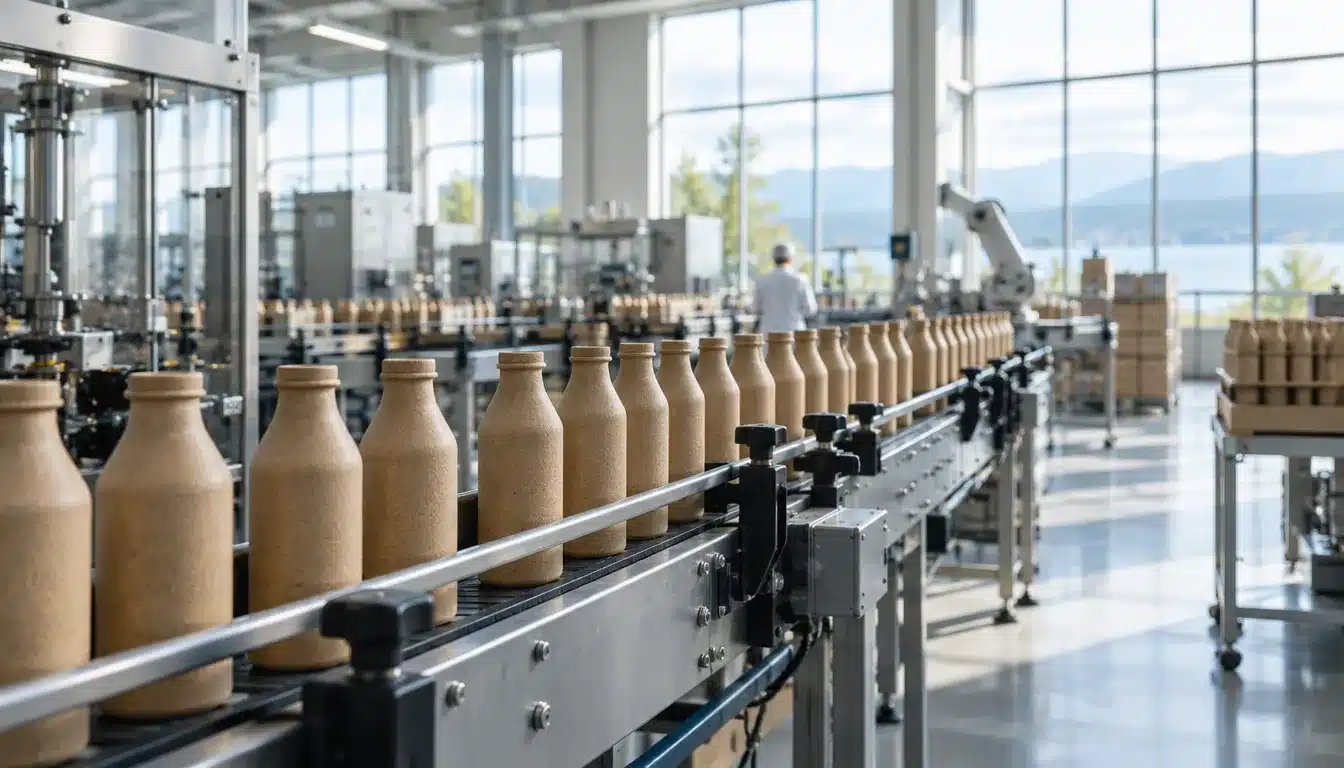
UK packaging company Pulpex has opened its first commercial-scale plant for paper-based bottles. The Scottish site can make up to 40 million bottles a year and most of its first output is already sold.
Pulpex has opened its first commercial-scale paper bottle plant, near Glasgow in Scotland. The site can make up to 40 million fibre-based bottles a year. It moves the company’s technology from pilot lines into full-scale output.
The UK’s National Wealth Fund and the Scottish National Investment Bank backed the facility. In 2025, the two state-backed lenders led Pulpex’s $78m Series D round, which paid to build the plant. Both lenders use public money to draw private cash into new green industries.
From pilot to production
Pulpex launched in 2020 to develop bottles made from wood pulp. Its long-term goal is to reach one billion bottles a year. Glasgow is the first step towards that figure.
Scott Winston, managing director and chief science and sustainability officer at Pulpex, set out the size of that goal. He said the initial 40 million units a year make Glasgow “the first step on our path to one billion units globally”.
Chief executive Sandy Westwater said the opening marks the point where the company “moves from proving the technology to proving the industrial model”. In other words, the question now is whether Pulpex can make bottles at a cost and pace that buyers will accept.
Early demand from brands
Pulpex says it has already sold more than 90 per cent of the plant’s initial capacity for the current financial year. Orders cover both food and non-food products, which gives the plant a spread of early buyers. Selling most of the first year’s output before launch takes much of the risk out of a new plant.
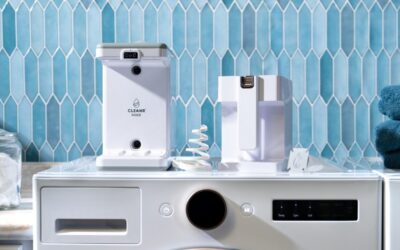
Purely Scottish plans to sell natural mineral water in Pulpex bottles. Meanwhile, the UK cleaning brand smol will add the bottles to its liquid laundry range.
Pulpex counts Pilot Lite and Diageo, the drinks group, among its backers. Its partner list also includes large consumer goods companies such as Unilever, PepsiCo, Castrol, Haleon, Estée Lauder and Kraft Heinz.
A model built on licensing
The Glasgow site will also serve as the reference plant for a licensing network. Under that model, partners build and run their own factories using Pulpex technology. The paper bottle plant in Scotland is therefore a showroom as well as a factory.
Swiss paper maker Perlen Industrieholding is the first European partner. It holds exclusive rights in Switzerland, Austria, Italy and southern Germany. In addition, India-based Alternicq has exclusive rights to develop the market in India and the Gulf states, as a step towards a full manufacturing deal.
Licensing lets Pulpex grow without paying for every plant itself. Each partner takes on the cost and risk of its own site, while Pulpex earns from the technology. However, it also means the Glasgow site must prove the process works reliably before partners commit their own capital.
Paper as a plastic substitute
Pulpex makes its bottles from wood pulp from sustainable sources and says they contain no hidden plastic. The bottles are compostable and recyclable. So consumers can put them in household paper and card recycling.
The company says the bottles have a much lower carbon footprint than glass or plastic. Other firms are pursuing similar ideas, such as a paper-based aseptic carton for drinks. Together, these efforts test how far fibre can replace plastic in everyday packaging.
Policy is adding pressure on brands to make the switch. The European Union’s Packaging and Packaging Waste Regulation sets tougher rules on how packs are designed for recycling and how much recycled material they use. In the UK, meanwhile, producers now pay fees for the packaging they place on the market.
For now, the new paper bottle plant gives Pulpex a commercial base. If it runs well, it will support both direct sales and the licensing plan. That would bring the one billion bottle goal closer.