Inpex has started injecting CO2 captured from hydrogen production into a depleted gas field in Niigata Prefecture, the company’s first announced injection and a milestone for Japan’s first integrated blue hydrogen and ammonia demonstration.
The Japanese oil and gas group is sending CO2 generated as a by-product of hydrogen production into a subsurface reservoir in the Hirai area of the Higashi-Kashiwazaki Gas Field, where gas production has already ceased. Carbon Pulse described it as the company’s first announced injection.
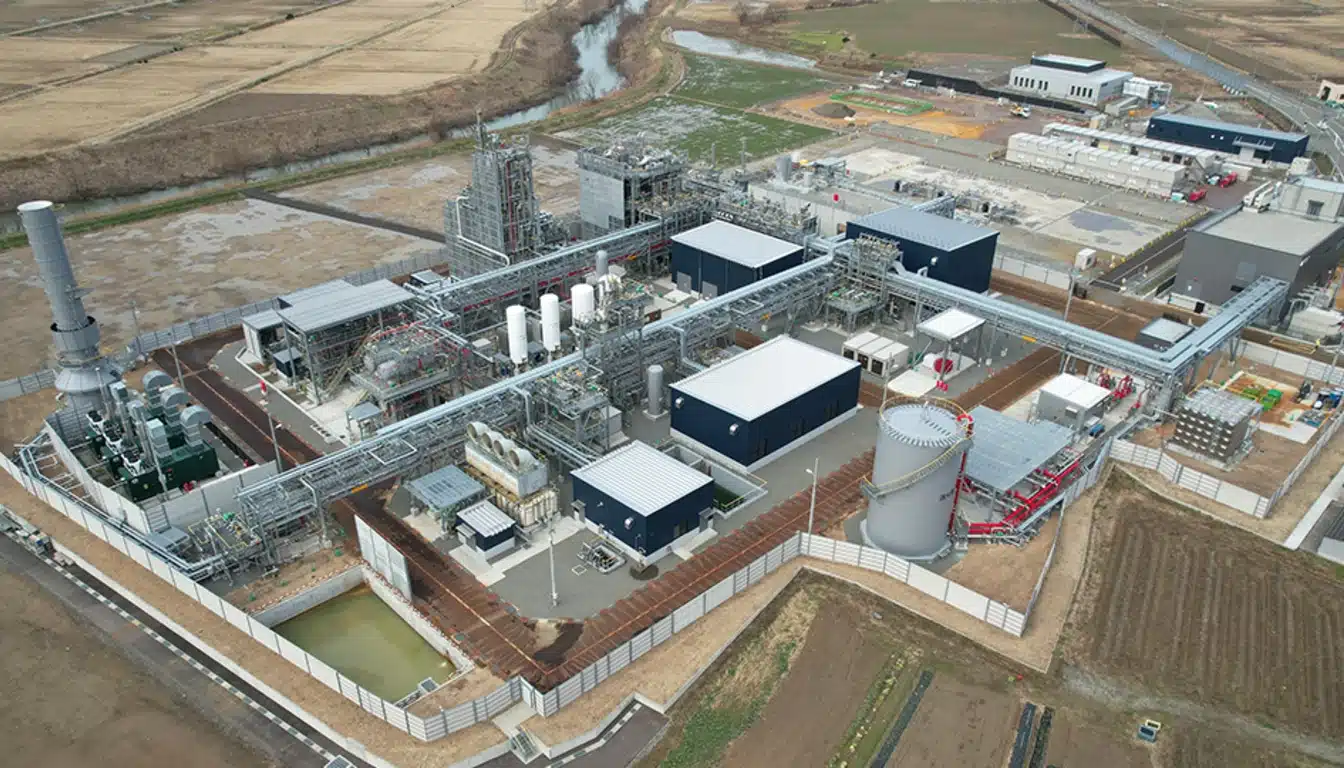
The work forms part of Inpex’s Integrated Blue Hydrogen and Ammonia Production and Utilisation Demonstration Project in Kashiwazaki City. It is the first project in Japan to cover the whole hydrogen and ammonia chain, from production through to use, and adding storage means the emissions created when the hydrogen is made can now be captured and locked away.
A closed loop inside one prefecture
The project is deliberately local. Feedstock gas comes from the Inpex-operated Minami-Nagaoka Gas Field in Niigata. Hydrogen produced at Kashiwazaki Hydrogen Park is burned in hydrogen-fired generators on site, and the electricity is supplied within the prefecture. A portion of the hydrogen is converted into ammonia for customers in the region. Trade publication gasworld put annual ammonia output at around 700 tonnes.
The capture step uses HiPACT, a high-pressure CO2 capture technology developed jointly by JGC Global and BASF. Capturing at high pressure is expected to cut the energy and cost of the whole capture and injection chain compared with conventional methods, which matters for the economics of both blue hydrogen and standalone carbon capture and storage projects.
Storage capacity is Japan’s real constraint
Public money sits behind both halves of the project. The hydrogen, ammonia and capture facilities are subsidised by the New Energy and Industrial Technology Development Organisation under its fuel ammonia programme. The storage side is a joint research project with the Japan Organisation for Metals and Energy Security to assess how much CO2 depleted oil and gas fields in Japan can hold.
That second question is the most important for Japan’s strategy. The country plans to import and produce large volumes of hydrogen and ammonia, but its domestic storage capacity is limited and largely unproven.
Injection at a depleted field on the Japan Sea coast gives the government real data on what is possible at home.
Inpex set out its direction in February 2025 with INPEX Vision 2035, which commits the company to expanding low-carbon offerings centred on carbon capture and storage and hydrogen by 2035. The Kashiwazaki demonstration is its most visible step towards that goal so far.