
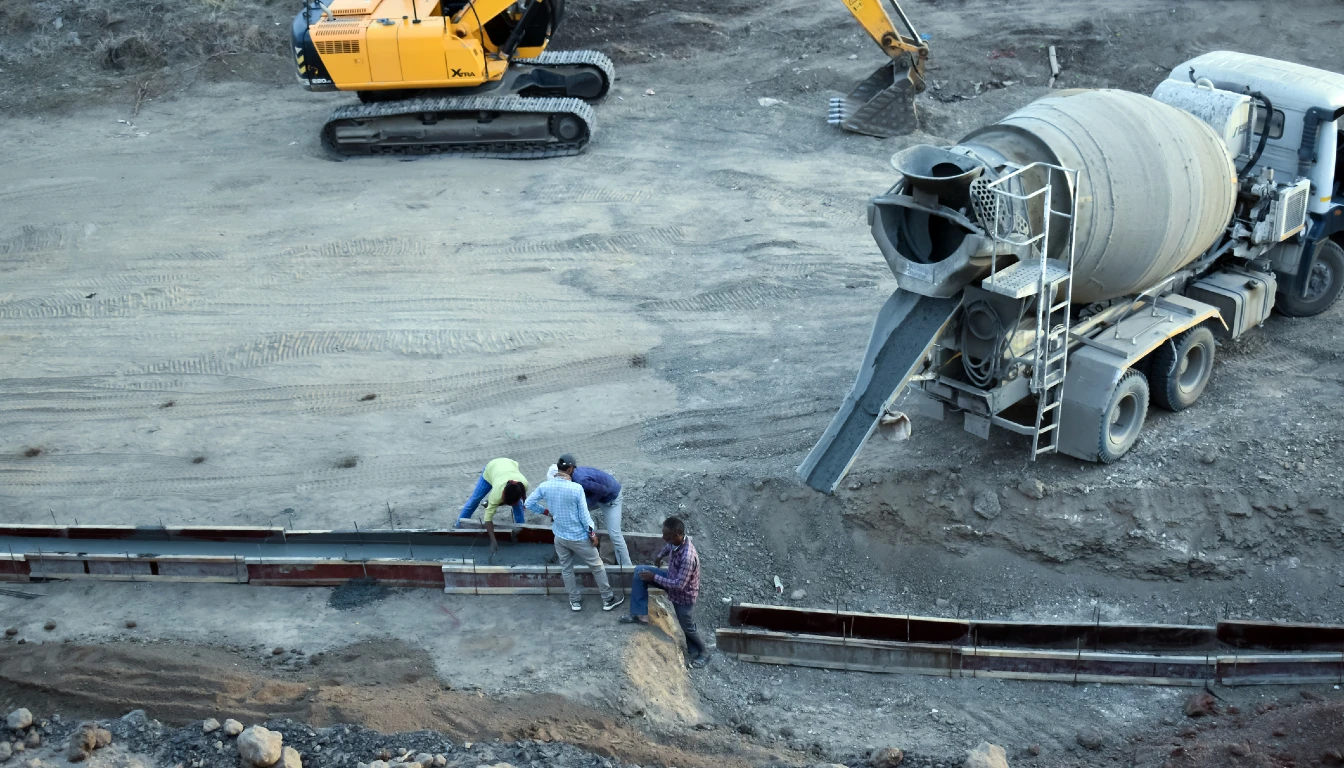
India has become the first country to commercially produce bio‑bitumen from agricultural residue, marking a significant step in sustainable road construction, emission reduction, and rural economic development.
Union minister Nitin Gadkari said agricultural waste can be converted into a valuable national resource as India moves to commercialise bio‑bitumen, describing the development as a milestone for the nation’s infrastructure and circular economy. Speaking at the CSIR’s “Technology Transfer Ceremony” in New Delhi, Gadkari said: “Today marks a historic milestone in India’s road infrastructure, as the nation becomes the first in the world to commercially produce bio-bitumen,” congratulating CSIR and its scientists and thanking Union MoS Jitendra Singh for his support.
Gadkari framed bio‑bitumen as a transformative step towards the government’s “Viksit Bharat 2047” vision, arguing the material will reduce pollution from stubble burning, strengthen rural livelihoods and cut dependence on imported crude. He pointed to successful trials using rice straw, which he said have shown better performance than petroleum‑based bitumen and help reduce stubble burning. The Indian Biogas Association has also highlighted that converting 7.3 million tonnes of paddy straw into compressed biogas and bioethanol could save about ₹1,600 crore in foreign exchange while cutting pollution, the report said.
Technical and commercial underpinnings for the initiative are drawn from work by the Central Road Research Institute (CRRI) and industry partners. CRRI’s description of the technology explains how rice straw is pyrolysed into bio‑oil and upgraded into a bio‑binder suitable for flexible pavements. A field trial using bio‑bitumen was constructed on the NH‑6 (Jorabat–Shillong Expressway) and demonstrated satisfactory performance under traffic, according to CRRI. The institute estimates 15% blending of bio‑bitumen could save roughly ₹4,000–4,500 crore annually and cut greenhouse‑gas emissions by about 70%.
Commercialisation is already under way. The Council of Scientific and Industrial Research has issued licences to multiple Indian manufacturers to produce bio‑bitumen, the Hindustan Times reported, a move intended to accelerate production and adoption in national highway projects. Industry partners including Praj Industries say the first sustainable road using lignin‑based bio‑bitumen was inaugurated on December 21, 2024, at the Nagpur‑Mansar bypass (NH‑44). Praj’s press release and reporting by local outlets described the project as demonstrating significant GHG reductions and the feasibility of partial replacement of fossil‑derived bitumen in highways.
Government announcements have also linked the bio‑bitumen programme to broader bioenergy ambitions. The Financial Express reported Gadkari’s assertion that India’s aviation sector could reach 20% use of bio‑aviation fuels made from stubble within five years, a goal framed as part of efforts to reduce a large fossil‑fuel import bill and boost farmer incomes. Industry forecasts cited in government statements suggest bioenergy policies could attract investments of about ₹37,500 crore and support the setting up of some 750 compressed biogas projects by 2028–29.
Independent accounts of field performance and lifecycle benefits vary in tone but converge on several points: that agri‑residue‑derived binders can cut emissions materially compared with petroleum bitumen, that commercial scale‑up requires licencees, supply chains and quality assurance, and that diverting crop residue from open burning would relieve seasonal air pollution in many northern states. Speaking to The Times of India about earlier trials, project representatives noted a service road in Halol, Gujarat, that had endured 2.5 years and three monsoon seasons while emerging 40% stronger than a comparable conventional section.
The policy and industrial push raises practical challenges. Scaling supply chains for rice straw, bamboo and other biomass will require collection, transportation and preprocessing infrastructure; ensuring consistency of bio‑binder quality across diverse producers will need regulatory standards and testing regimes; and blending rates, pavement design standards and long‑term maintenance protocols must be integrated into highway contracting. CRRI and industry partners are positioning technology licensing, trial sections and collaborative projects as steps to address those needs.
For policymakers and climate‑tech observers, the initiative offers an intersection of climate mitigation, rural economy and industrial policy. Industry data shows potential foreign‑exchange savings and emissions reductions if blending targets and bioenergy projects are realised at scale. The government’s messaging links those economic and environmental gains to farmer income and waste‑to‑value circularity, while independent trial reports provide early performance validation. As production expands, the credibility of claims about cost savings, emission cuts and pavement longevity will hinge on transparent field data, standardised testing and sustained monitoring across diverse geographic conditions.