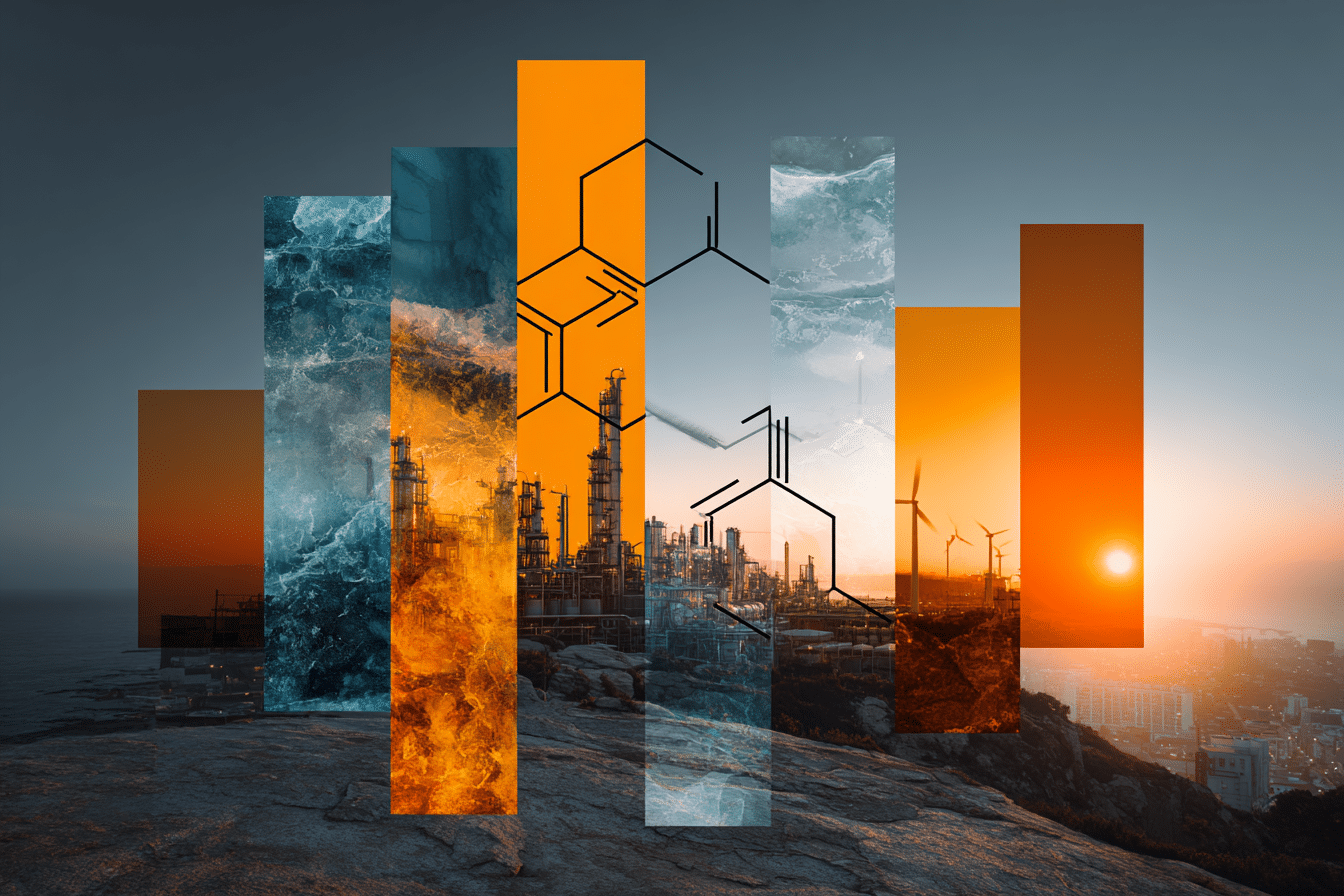
The closure of the Strait of Hormuz, following the outbreak of conflict between the United States and Iran, sent Brent crude above $100 a barrel for the first time in four years. It also sharpened a question that climate technology investors have been asking for a decade. Can synthetic fuels ever be produced cheaply enough to matter?
Florian Hildebrand believes they can. He is co-founder and chief executive of Greenlyte, a company founded in 2022 in Germany’s Ruhr industrial region that is developing what it describes as a fully electrified platform for producing the green CO2 and hydrogen feedstocks needed to make sustainable aviation fuel and emethanol. The approach is called Liquid Solar. The argument at its centre is that everyone in the industry has been asking the wrong question.
“These technologies only make sense when you can really make use of fully intermittent off-grid energy,” Hildebrand says, “because that’s the cheapest form of energy.”
How does the technology work?
Greenlyte’s process begins with a liquid absorption system that captures CO2 directly from the atmosphere. That reaction produces a crystalline solid, potassium bicarbonate, which the company brands as greenlyte and which gives the business its name. The material itself is chemically commonplace, found in mineral water and used in food production. The innovation lies in how Greenlyte uses it: as a physical buffer between the two stages of the system, storing captured carbon until renewable electricity is available to process it.
The front end runs on relatively modest grid power and is optimised for continuous operation. The greenlyte solid then allows the energy-intensive back end, an electrolysis stage that releases the CO2 and co-produces hydrogen, to run independently on intermittent renewable power.
“The desorption, the back end, is very much an energy question,” Hildebrand explains. “That’s where 95% of the energy of your system sits.”
The decoupling is the core innovation. Conventional direct air capture systems must keep the entire process running together, which makes continuous grid power a necessity and keeps costs high. By physically separating capture from energy input via the greenlyte intermediate, the company can time its electrolysis to coincide with surplus renewable generation. The electrolysers are also designed to run beyond their rated capacity when power is plentiful.
“We design a system to be run at 100%, but we can run it at 150%,” Hildebrand says. “This is how we can pump a little bit more energy into the system when we have renewable energy.”
The company has accumulated 15,000 hours of process operation. Its co-founder, Dr. Peter Behr, spent 15 years developing the underlying technology through academic research before the two met while Hildebrand was touring German universities in search of a credible climate technology to commercialise.
Why abandon the carbon credit model?
Greenlyte is deliberate in how it positions itself. It does not lead with carbon removal. It leads with fuel production. That distinction matters commercially.
“Carbon capture is very much associated today to carbon credits and negative emissions,” Hildebrand says. “And this has gotten under a lot of economic pressure.”
The voluntary carbon market has contracted sharply since its peak. Corporate buyers have retreated and credit prices have fallen. Hildebrand argues that building a business model on carbon removal revenues was always a fragile foundation. Greenlyte’s revenues, when they come, will derive from selling green feedstock to fuel producers, not from credits.
The target market is aviation and shipping, both sectors that cannot readily electrify and both facing mounting regulatory pressure to decarbonise. The EU’s ReFuelEU Aviation regulation, which entered force in 2023, mandates rising blending requirements for sustainable aviation fuel through to 2050. Demand for credible feedstock supply is real, even if the economics of production remain challenging.
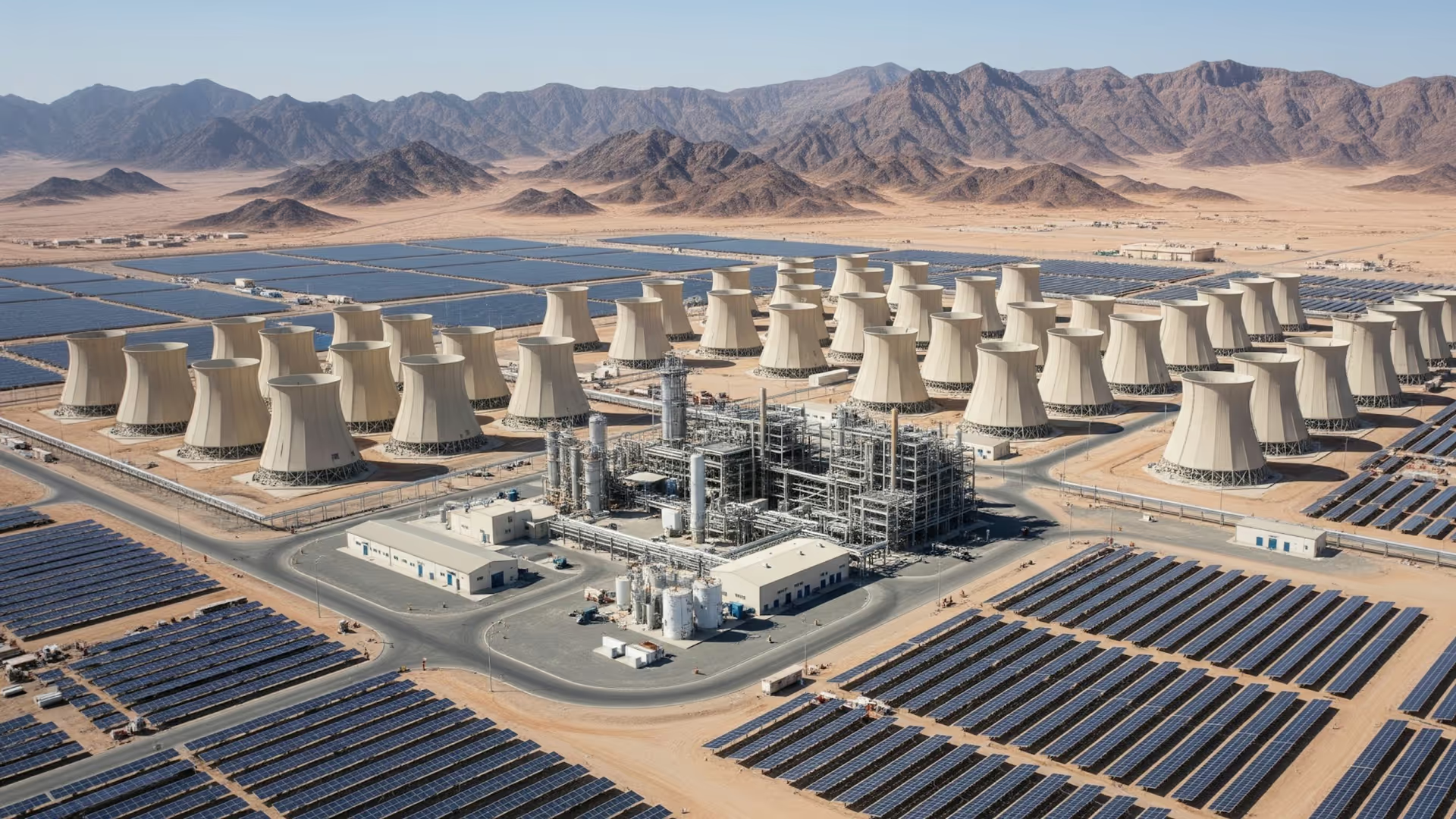
Visual from Greenlyte showing the potential scale of a full plant.
Can the tolling model bridge the volume gap?
Greenlyte’s answer to the volume problem is a tolling model. Rather than constructing standalone facilities and attempting to reach gigatonne scale independently, the company intends to site modular units adjacent to existing fuel reactors and supply them with green feedstock. The reactor operator benefits from a partial decarbonisation of its output without replacing infrastructure. Greenlyte benefits from the scale economics of a large industrial asset it did not have to build.
“We are trying to innovate a tolling model where we use existing infrastructure to only feed in feedstock into existing reactors,” Hildebrand says.
The approach is also a direct response to the industry’s experience of premature scaling. Hildebrand is unusually candid on this point, citing Climeworks, the Swiss direct air capture pioneer, as an instructive example. Climeworks has publicly acknowledged the difficulties it encountered scaling its Mammoth facility in Iceland before its technology costs had fallen sufficiently.
“They would have probably needed a little bit more time before they go to their 35,000-tonne facility,” Hildebrand says. “We can all put ambitions on our slides, but really we have to build it, scale it and repeat it.”
What does a deal with Rheinmetall mean?
Alongside its commercial eFuels roadmap, Greenlyte joined a strategic alliance announced in November 2025 that carries a different kind of urgency. The GigaPtX initiative, led by the German defence contractor Rheinmetall and also involving electrolyser manufacturer Sunfire and eFuels producer INERATEC, aims to build a Europe-wide network of several hundred modular synthetic fuel plants. Each facility is designed to produce between 5,000 and 7,000 tonnes of fuel per year. Greenlyte supplies the green CO2 feedstock via its Liquid Solar technology. Rheinmetall’s stated ambition is to enable European armed forces to produce their own fuel independently of global fossil supply chains.
Hildebrand describes the strategic logic in terms of a resilience premium that exists even where the pure eFuels economics do not yet stack up.
“We entered a strategic deal with Rheinmetall, INERATEC, Sunfire to build resilient small-scale fuel applications that can have a civil application,” he says. “Even in Germany, you can build these facilities and run them profitably for 20, 30, 40% of the time. And for the rest, you just have to shut them off.”
The ability to operate intermittently is precisely the feature that most eFuels developers treat as a liability. For Greenlyte, it is the point. A facility designed around cheap surplus power can tolerate downtime in a way that a conventional industrial plant cannot. That same flexibility, Hildebrand argues, is what makes the resilience use case viable even in northern European weather conditions.
“If you can argue that there is a resilience premium where you say, let’s build these facilities for times of crisis, in areas where it doesn’t make sense otherwise, then that could be the other side of the market.”
The GigaPtX alliance was announced four months before the Strait of Hormuz closed. The argument for domestic synthetic fuel production in Europe has since become considerably harder to dismiss.
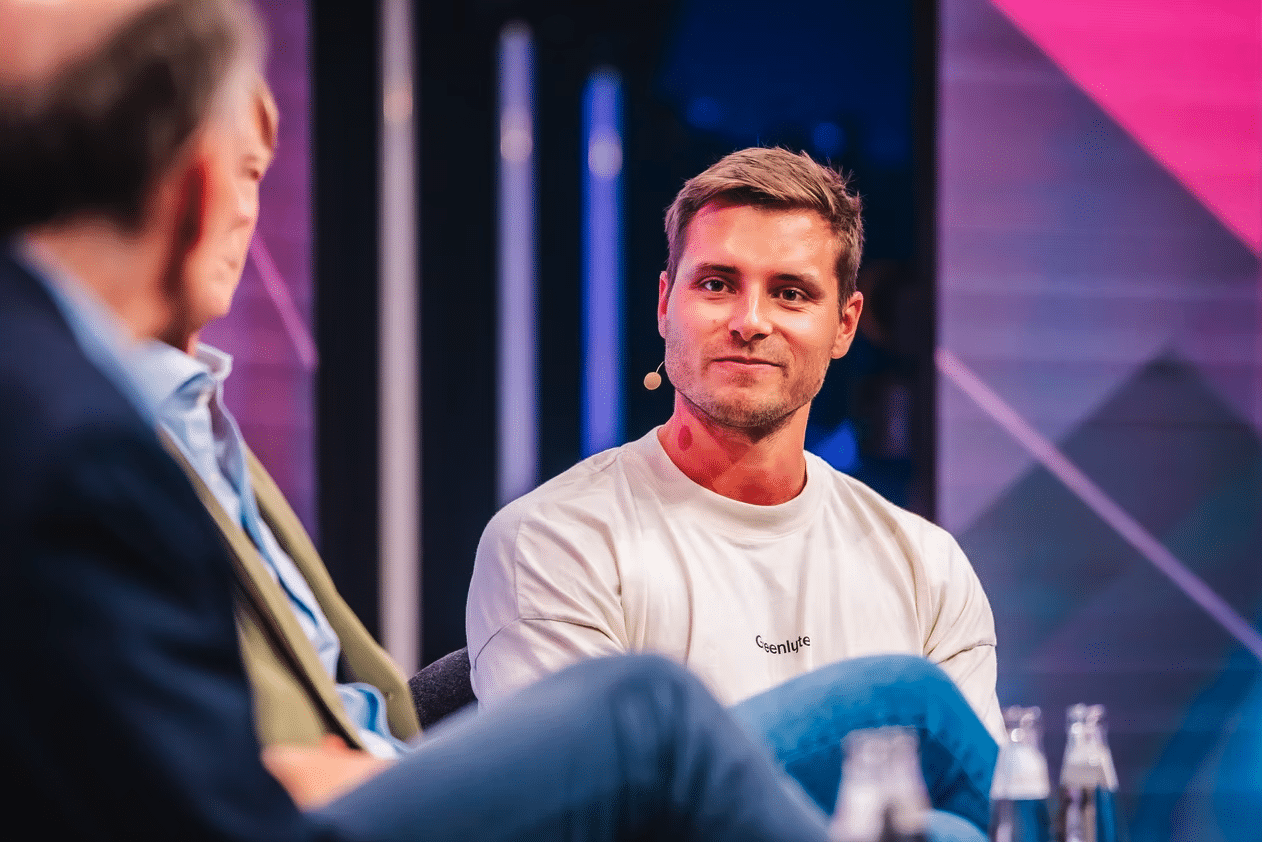
Florian Hildebrand. Picture from his website.
What is Greenlyte’s timeline to scale?
Greenlyte has raised just over €55 million to date, split equally between grants and equity. The company recently closed an extension round that takes its runway to mid-2028. Its headquarters are in Essen, with pilot and demonstration facilities nearby in the former coal and steel heartland of the Ruhr.
The immediate plan is to deploy the first module of a first-of-a-kind 1,500-tonne-per-year eMethanol facility in Germany by the end of 2026, with two further modules following through 2027 and into 2028. Germany’s weather conditions are intermittent enough to stress-test the system. Hildebrand notes that roughly ten days a year in Germany replicate the conditions that apply year-round in Oman or northern Africa, allowing the company to extrapolate performance data for target deployment regions before committing capital there.
The ambition is to have a unit operating close to an existing fuel reactor in a target region before 2030, demonstrating that a small but meaningful share of fossil feedstock can be displaced at economics approaching parity.
“Before 2029, 2030, we can deploy something in the target region close to an existing reactor where we show that maybe 2%, 5% of this reactor is now turning out green feedstock,” he says.
Beyond that, Hildebrand points to 2040 as the horizon for a more substantial market shift, once early profitable units have established the bankability needed to attract infrastructure capital at scale. He is direct about the tendency to misjudge technology timelines.
“People still underestimate what you can do in the long term and overestimate the short term,” he says.
At the time of writing, the Strait of Hormuz remains closed to many ships, with no clear timeline for resolution. The crisis has not changed Greenlyte’s roadmap. It has, however, changed the conversation around it. A company that set out to lower the cost of synthetic fuels through better energy economics now finds itself operating in a world where the fragility of fossil fuel supply chains is a live policy emergency. Hildebrand started telling this story in 2022. Everyone else is now beginning to catch up.