
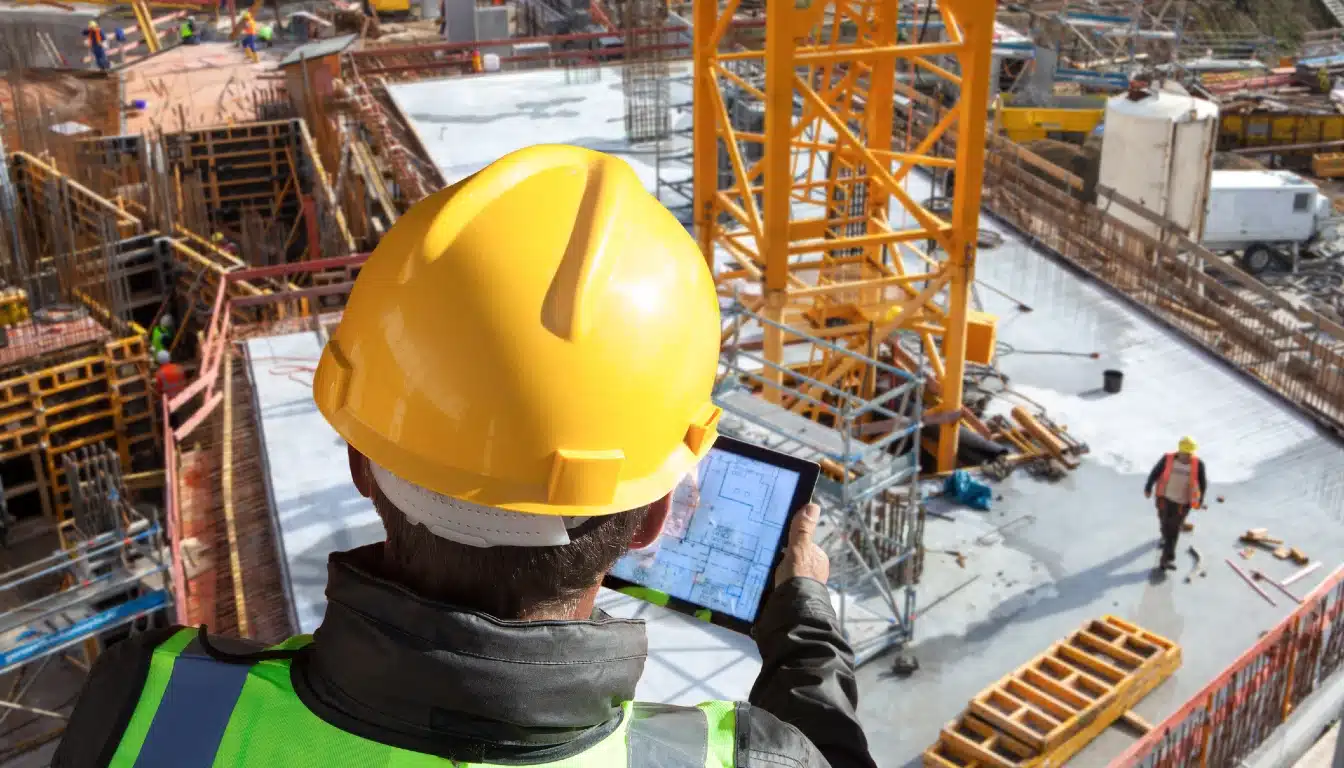
Planned carbon and cost savings in construction often look convincing and realistic on paper. Delivering them on site has proved far harder. A growing number of developers and contractors now argue that the gap lies less in ambition than in execution, specifically in whether projects can see, verify and act on what is actually happening as materials arrive on site.
That is the problem QFlow set out to address. Founded in 2018 by civil engineers Brittany Harris and Jade Cohen, the company focuses on capturing real-time materials, waste and cost data directly from construction sites, replacing paper tickets, estimates and spreadsheets with verified digital records.
The stakes are high. The built environment as a whole accounts for close to 40 percent of global carbon dioxide emissions, according to the United Nations Environment Programme. Around 11 percent comes from embodied carbon in construction materials and processes. With demand for new buildings and refurbishment continuing to rise, decarbonisation increasingly depends on ensuring projects deliver the efficiencies they were designed to achieve.
Where plans unravel on site
Harris argues that the industry’s biggest failures are rarely deliberate. They are structural. “We have these massive problems with materials coming onto site that either they aren’t the right stuff, they’re in the wrong quantities, or they’re not approved against the design or the suppliers,” she said. “We’re dealing with that in a very ad hoc way in construction currently.”
That lack of visibility has real consequences. Harris estimates that around 30 percent of rework in construction is driven by materials mismanagement. In one example she describes, a subcontractor substituted a pipe that matched the dimensions in the design but lacked the required fire rating. It was installed below a rail station, covered over, and only discovered later. “The overall knock-on effect was about two weeks delay in programme, but also massive cost and material waste as well,” she said. “A small thing like the substitution of a pipe can have these crazy knock-on effects that end up costing our industry billions every year.”
What makes the problem systemic is how normalised it has become. Harris notes that most projects simply assume errors will happen and price them in. “They have these buffers in their budget that is typically about 20 percent of the programme,” she said. “They just say, ‘We’ve got a 20 percent error rate.’ And that’s just how the industry operates. And it’s mad.”
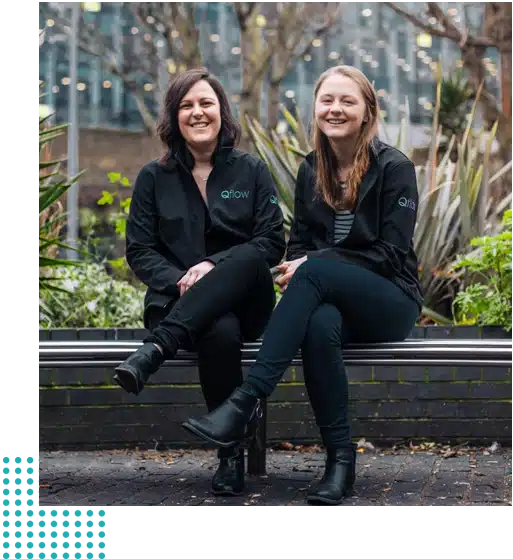
Brittany Harris (right) and Jade Cohen, co-founders of QFlow.
Technology as early warning, not automation
QFlow positions technology as an enabler rather than a replacement for human judgement. The platform allows site teams to capture deliveries with a simple photograph. That data is then matched against design specifications, suppliers and approvals, flagging discrepancies before they cascade into rework.
“Technology can surface the risks and say, ‘You’ve had this pipe delivered, it doesn’t match the design specification, and here’s the evidence,’” Harris said. “Humans still need to make the judgement call, but the technology can assess, out of a thousand deliveries, which ten you actually need to pay attention to.”
That distinction matters in a sector where labour is stretched and oversight is fragmented. Harris pushed back on the idea that poor outcomes are primarily driven by fraud.
“I’m sure there is a small element of fraud going on,” she said. “But I genuinely think that the majority of the time the industry is trying to do the best with what it’s got. The feedback loops of information just aren’t there.”
The carbon implications are significant. Materials mismanagement drives unnecessary extraction, manufacturing and transport, inflating embodied emissions long before a building is occupied. By creating a verified record of what goes into a project, QFlow’s data can feed directly into whole-life carbon assessments and corporate reporting tools, including those used to quantify Scope 3 emissions.
Regulation, data and shifting incentives
Regulation is accelerating demand for that level of precision. Harris said new rules such as the Corporate Sustainability Reporting Directive in Europe and the UK’s Building Safety Act are forcing firms to move beyond estimates. “Carbon reporting regulation has helped really focus people’s minds on saying, actually, we do need proper data behind this,” she explains. “The regulation we’re seeing has a real focus on transparency, accountability and being able to connect the steps in the process.”
Geography shapes the conversation. In Europe, sustainability reporting is increasingly business as usual, if sometimes grudging. In North America, Harris sees similar data demands emerging under different labels. “There’s a lot more talk of resilience, quality and cost control,” she said. “But when it comes to materials and waste, it’s exactly the same information.”
QFlow has adapted accordingly. What began as a tool for tracking waste has expanded into a broader platform for quality control, supply-chain risk and cost management. Recent product releases focus on mapping deliveries back to design intent, closing what Harris calls the loop between planning and reality.
Looking ahead, Harris believes the industry needs a cultural shift as much as a technological one. “I would love construction to step away from this fixation on outputs and focus more on outcomes,” she said. “If we focused on delivering places that are genuinely sustainable, efficient and safe, rather than just ticking boxes, we’d be in a much better place.”
For an industry responsible for such a large share of global emissions, that shift could determine whether decarbonisation targets remain aspirational or finally become deliverable.