
Brussels has proposed a single Public Procurement Regulation covering nearly 15 per cent of EU GDP. Quality criteria would carry at least 30 per cent of the weight in every award decision.
The European Commission published the proposal on 9 September. It merges three existing procurement directives into one directly applicable rulebook. Because a regulation needs no national transposition, Brussels gains tighter control over how public buyers spend.
That reach is considerable. Public procurement accounts for nearly 15 per cent of EU GDP. So the criteria attached to that spending help decide which industrial products find a market at all.
Best price-quality ratio becomes the default
Under the draft, the best-price-quality-ratio becomes the standard award mechanism. Quality criteria must then carry at least 30 per cent of the weight in any decision. Buyers can reach that threshold through award criteria, comparable specifications or performance clauses.
The shift away from lowest price has wide backing. Campaign groups, trade unions, industry bodies and academics have all pressed for it. However, the definition of quality in the text is broad, covering environmental, social, innovation, security and European preference requirements.
Each criterion can also be applied on its own. So a contract could be awarded on European preference alone, with no environmental or social test attached.
Green procurement stays optional
The proposal gives Green Public Procurement its own chapter. It also sets out clearly what the concept covers. Still, buying green remains a choice rather than a duty for contracting authorities.
Bellona Europa argues that this conflicts with Article 5 of the draft, which lists climate and environmental protection among the Union’s strategic procurement goals. The group wants co-legislators to reserve a share of awards for green procurement.
Linda Zarai, Policy Advisor for Clean Construction at Bellona Europa, said: “This proposal contains many good elements, but it leaves almost everything optional. ‘Quality’ can mean virtually anything, and public buyers could favour local content alone while forgoing environmental, social, or innovation requirements altogether. I struggle to see how this will serve EU competitiveness, the green transition, or stimulate innovation.”
National rules could be capped
Harmonisation cuts both ways. Italy, France and Spain already impose mandatory environmental conditions on their public buyers. Those national rules go further than the Commission’s draft.
As written, the text would make green procurement optional in those countries too. Bellona therefore warns that the proposal sets a ceiling on ambition rather than a floor. The organisation wants member states left free to exceed Union requirements.
The Commission also plans to repeal or amend green procurement provisions in fourteen pieces of sectoral law. Those include the Construction Products Regulation, the Net-Zero Industry Act and the Ecodesign for Sustainable Products Regulation. Reopening settled files carries its own risk.
Buying technologies before they scale
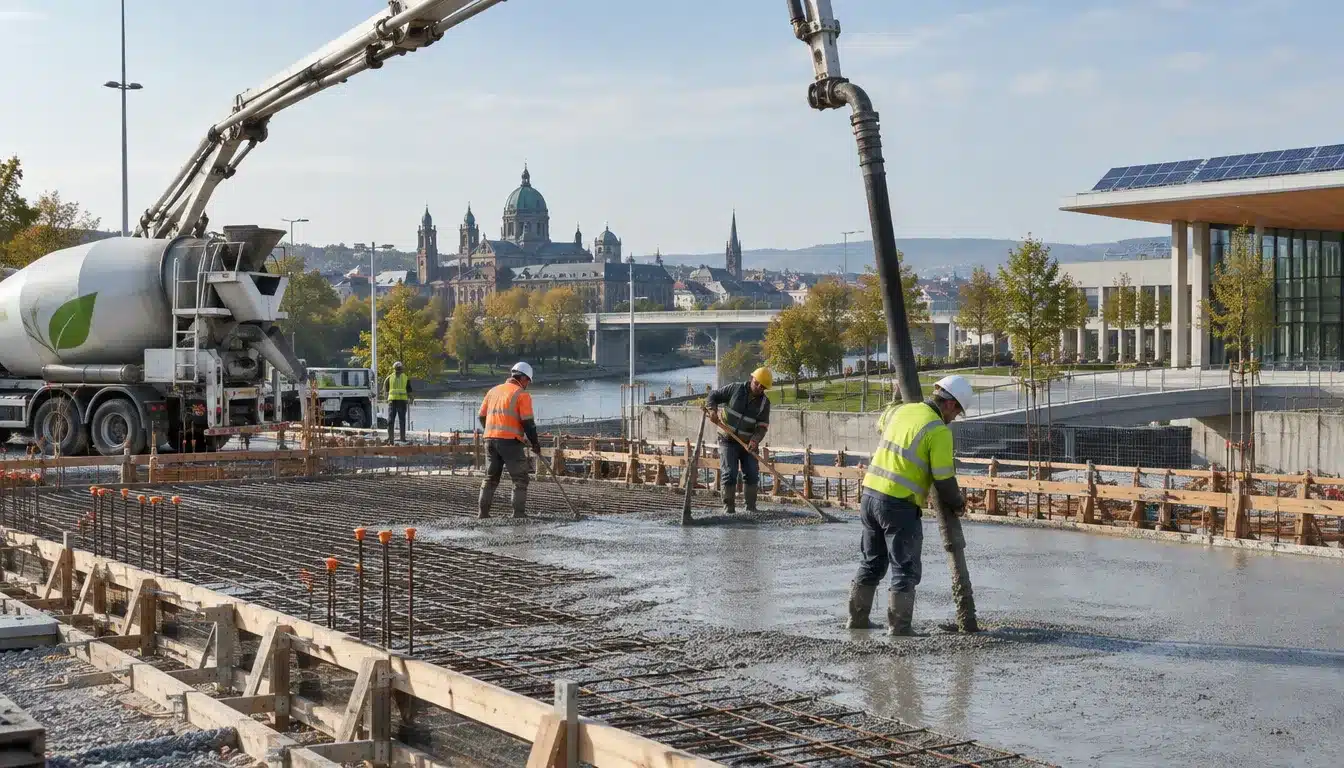
One chapter deals with procuring products that have yet to reach commercial scale. Contracting authorities would be allowed to buy emerging or niche technologies directly. Low-carbon cement and zero-emission construction equipment are the obvious candidates.
Irene Domínguez Pérez, Policy Manager for Embodied Carbon and Lead Markets at Bellona Europa, said: “Public buyers are uniquely positioned to create the lead markets Europe’s low-carbon producers need. Optional use of environmental criteria is not going to cut it: voluntary approaches have already been tried under the current framework, and they have failed to deliver scale.”
The proposal now goes to the Council and the European Parliament. Either institution can tighten or loosen the quality provisions during negotiations. Until they do, the effect on industrial decarbonisation stays uncertain.