AMP has closed $70m of project debt led by Galvanize to build a second AI sorting plant and a biochar system in Portsmouth, Virginia, under a 20-year deal with a regional waste authority.
AMP, a US firm that builds AI waste sorting plants, has raised $70m in project debt. Galvanize led the deal, which the two firms announced on 30 September. The cash will pay for a new sorting plant and an organics system in Portsmouth, Virginia.
Project debt is lent against one asset and the income it is due to earn. In this case, that income comes from a 20-year deal with the Southeastern Public Service Authority (SPSA). The authority handles waste for much of south-east Virginia, and the new plants are the next stage of the deal.
How AI waste sorting works
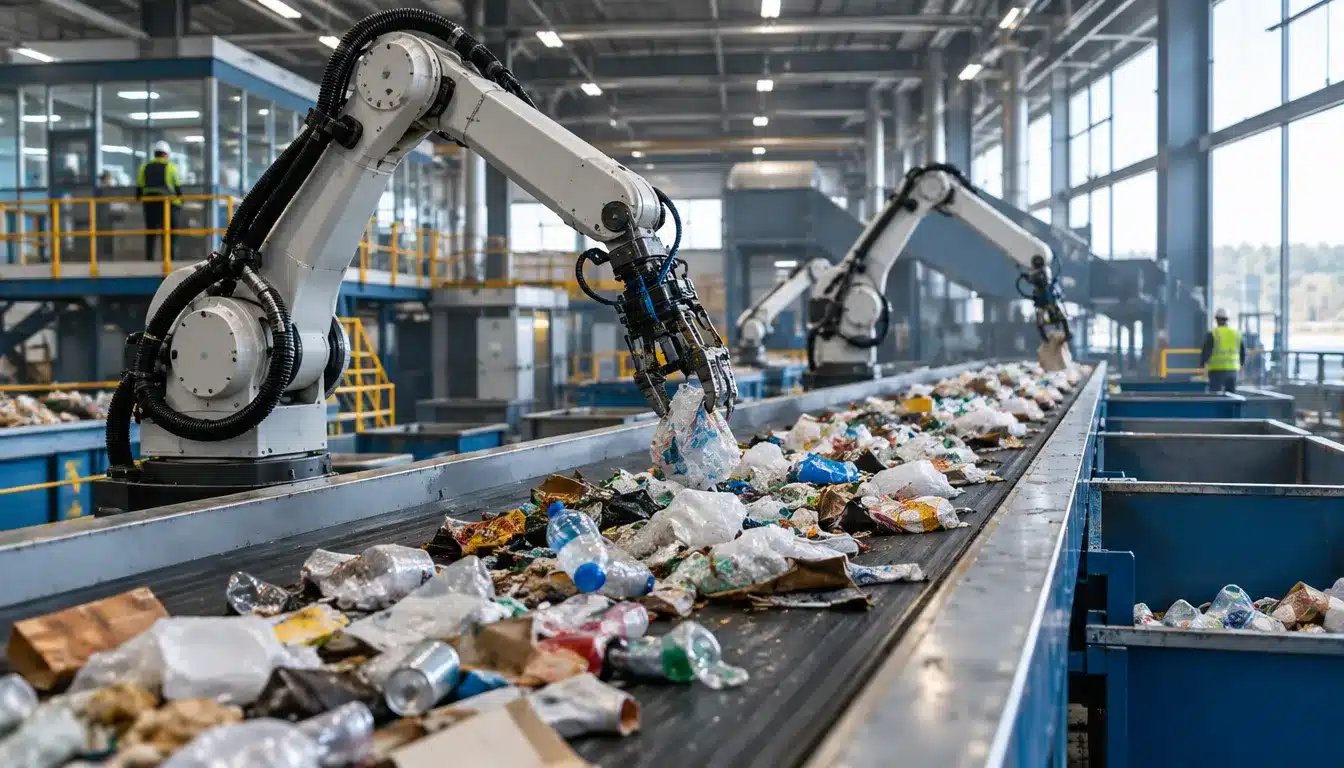
Most recycling relies on people to sort their waste at home. AMP’s AI waste sorting system takes raw rubbish instead, even sealed bin bags. Cameras linked to AI software spot items as they pass on a belt. Robots and jets of air then pull out plastic, metal, paper and food waste that would end up in landfill.
AMP says it runs three full-scale plants and has more than 400 AI systems at work in North America, Asia and Europe. Its first Portsmouth plant has now run for more than two years at commercial scale. That track record led SPSA to sign its deal with AMP in late 2025.
A 20-year contract with SPSA
At full scale, the regional system is built to take more than half a million tons of waste a year. That works out at more than 1,400 tons a day. The partners aim to keep at least half of it out of landfill.
Under the deal, AMP and SPSA expect to guarantee that 20% of SPSA’s waste is recycled. That is more than double the rate of the best town in the region. SPSA serves 1.2 million people across eight member communities. In addition, the partners expect the system to keep the Regional Landfill open into the next century and to cut long-term costs.
Biochar and carbon removal credits
AMP is now fitting out a second sorting plant in Portsmouth, due to open in early 2028. Like the first, it will pull recyclables and food waste out of mixed rubbish. Next door, a new unit will use indirect heat to turn that food waste into biochar. This charcoal-like solid can lock away carbon for hundreds of years.
At first, the biochar will cover the landfill each day. There, it can help filter dirty water, cut smells and limit methane. Later, it could go into building materials and cement.
Meanwhile, each tonne made will earn carbon removal credits. These will count towards AMP’s deal with Google to remove 200,000 tonnes of CO2e by 2030. AMP thus joins other firms that have signed large biochar supply deals this year.
What AMP and Galvanize say
Mary Macpherson, senior vice president of finance at AMP, said the deal shows the model can draw long-term lenders. “We’ve shown that this model works at commercial scale, and this financing demonstrates that we can pair our technology with long-term project capital to accelerate deployment.”
Her point goes to the heart of the deal. Lenders tend to want proof that new kit runs well before they lend against it. AMP says its two years of data from the first Portsmouth plant laid the ground for this phase.
Suresh Vasan, a partner in credit and capital solutions at Galvanize, was just as upbeat. “Waste is a massive, under-modernized infrastructure market, and AMP is changing its economics,” he said. “The combination of proven AI-powered technology, long-term contracted demand, and measurable economic and environmental benefits makes this an especially compelling infrastructure investment.”
Galvanize is a global asset manager that invests across energy, resilience and intelligence. It deploys capital through seed, venture, growth, public equity, credit and property funds. Clean Energy Counsel advised AMP on the deal, while Sidley Austin advised Galvanize.
A model for ageing waste systems
AMP pitches the Portsmouth set-up as a model other towns could copy. It joins AI waste sorting with long-term council contracts and project debt. The real test comes when the second plant starts work in 2028. If it hits its goals, SPSA’s recycling rate would more than double the best its towns have managed so far.