Plug has signed a 280MW electrolyser supply deal for Arcadia eFuels’ ENDOR e-SAF project in Denmark, plus a cooperation agreement covering more than 1GW of future capacity.
Plug Power signed a 280MW electrolyser supply agreement with Arcadia eFuels on 29 September. The deal covers ENDOR, the developer’s flagship e-SAF project in Denmark. It follows three years of joint engineering work, and deliveries will start once the project issues notice to proceed.
The two companies also signed a strategic cooperation agreement. It makes Plug the preferred electrolyser supplier for four more Arcadia eFuels projects in Europe and the Americas. Together, those projects represent more than 1GW of potential electrolyser capacity.
Turning Danish power into jet fuel
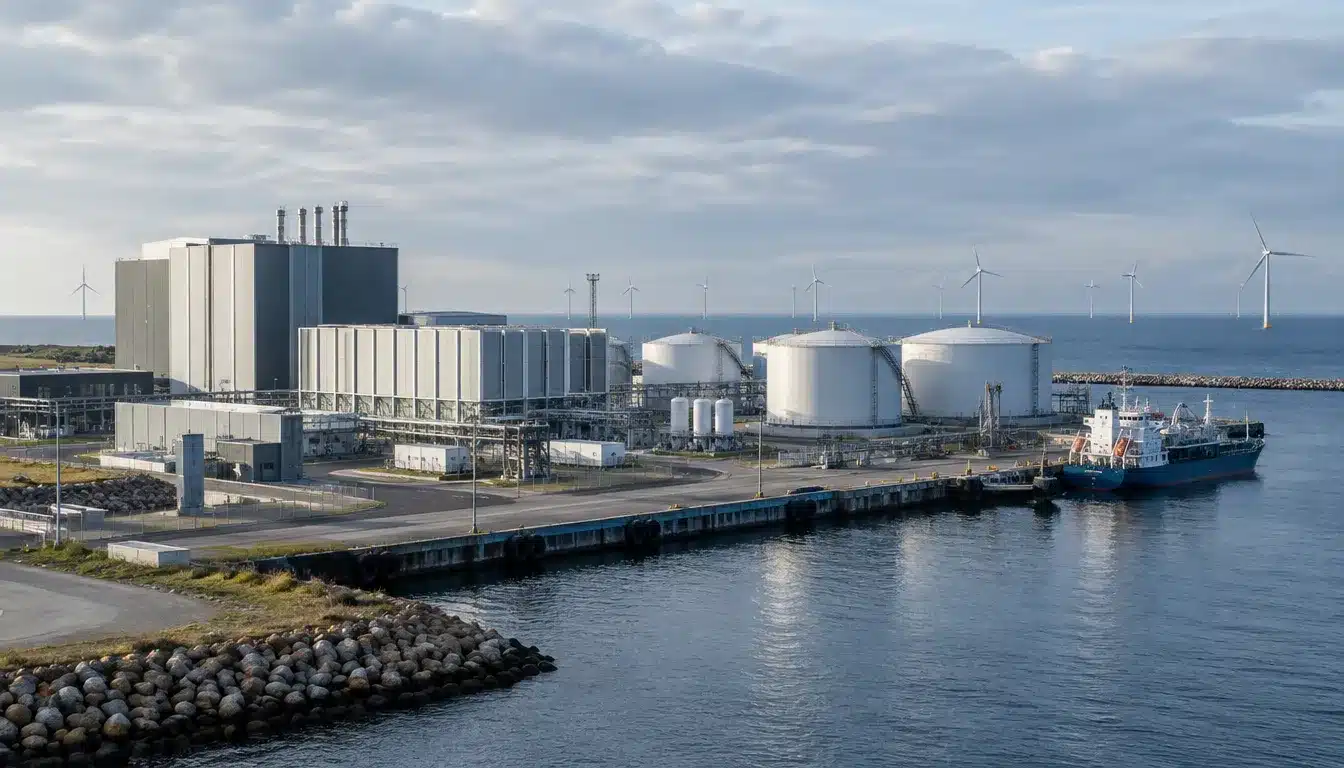
ENDOR will sit at the Port of Vordingborg on Denmark’s south coast. Once built, it will use renewable grid power to run 280MW of Plug’s GenEco electrolysers. They will produce roughly 110 tonnes of renewable hydrogen a day.
That’s a large volume by current standards. Plug’s own generation network produces about 40 tonnes of hydrogen a day, so ENDOR alone would make almost three times as much. Run every day of the year, it would yield more than 40,000 tonnes.
Arcadia eFuels will then combine that hydrogen with captured carbon dioxide to make jet fuel. The fuel works in standard aircraft, so airlines won’t need new engines or infrastructure. Synthetic fuels made this way are known as e-SAF.
Under the cooperation deal, Arcadia eFuels also gets priority access to Plug’s manufacturing capacity. That access applies as each future project moves forward.
Electrolysers are the core of any e-SAF project, since they split water into hydrogen using electricity. So the price of power and the efficiency of the equipment largely decide the cost of the fuel. For that reason, developers tend to lock in suppliers early, as Arcadia eFuels has done here.
Captured carbon is the other key input. Airlines can then burn the finished fuel in today’s aircraft, while its carbon comes from sources other than fossil oil.
Europe’s mandate creates demand
The EU’s ReFuelEU Aviation rules require a rising share of sustainable aviation fuel at European airports. The blend starts at 2% in 2025, rises to 6% in 2030 and reaches 70% by 2050. They include a sub-target reserved for synthetic fuels from 2030. As a result, an e-SAF project such as ENDOR gives airlines a compliance route and Europe a domestic fuel source.
Brussels is also using the carbon market to support uptake, including allowances for airlines using sustainable fuel. Meanwhile, e-SAF has started to reach commercial flights, such as the first US flight powered by eSAF.
José Luis Crespo, president and chief executive of Plug, pointed to the European market. “Europe remains our most active electrolyzer market, and e-SAF is one of the fastest-growing segments of demand as aviation fuel mandates take effect,” he said.
He also linked the project to energy security. Making fuel from European electricity and European carbon, he said, “strengthens the continent’s energy security.”
ENDOR moves towards a final investment decision
Amy Hebert, chief executive of Arcadia eFuels, said the e-SAF project is on track. “Project ENDOR is on the path to final investment decision,” she said. The supply deal, she added, is “one of the many project documents that have been finalized.”
She added that Plug gives the company “a proven and bankable electrolyzer partner at the scale this project demands.” Still, ENDOR has yet to reach that final decision, and deliveries depend on it. Plug won’t ship equipment until the project issues notice to proceed.
Plug builds its European pipeline
Plug is running several projects across Denmark, the UK, Spain and Portugal, with combined capacity in the multi-gigawatt range. These include a 100MW GenEco installation at Galp’s Sines refinery in Portugal.
ENDOR extends that footprint into e-fuels. For Plug, the cooperation agreement also gives it a route into four more projects if Arcadia eFuels brings them forward.