Utility-scale solar and batteries accounted for the overwhelming majority of the 368 US power plants that started up between January and June, while gas and wind additions stayed comparatively modest.
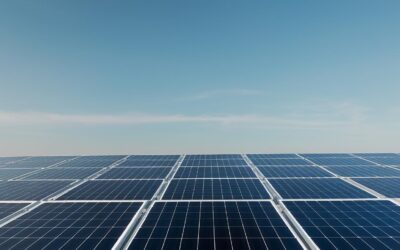
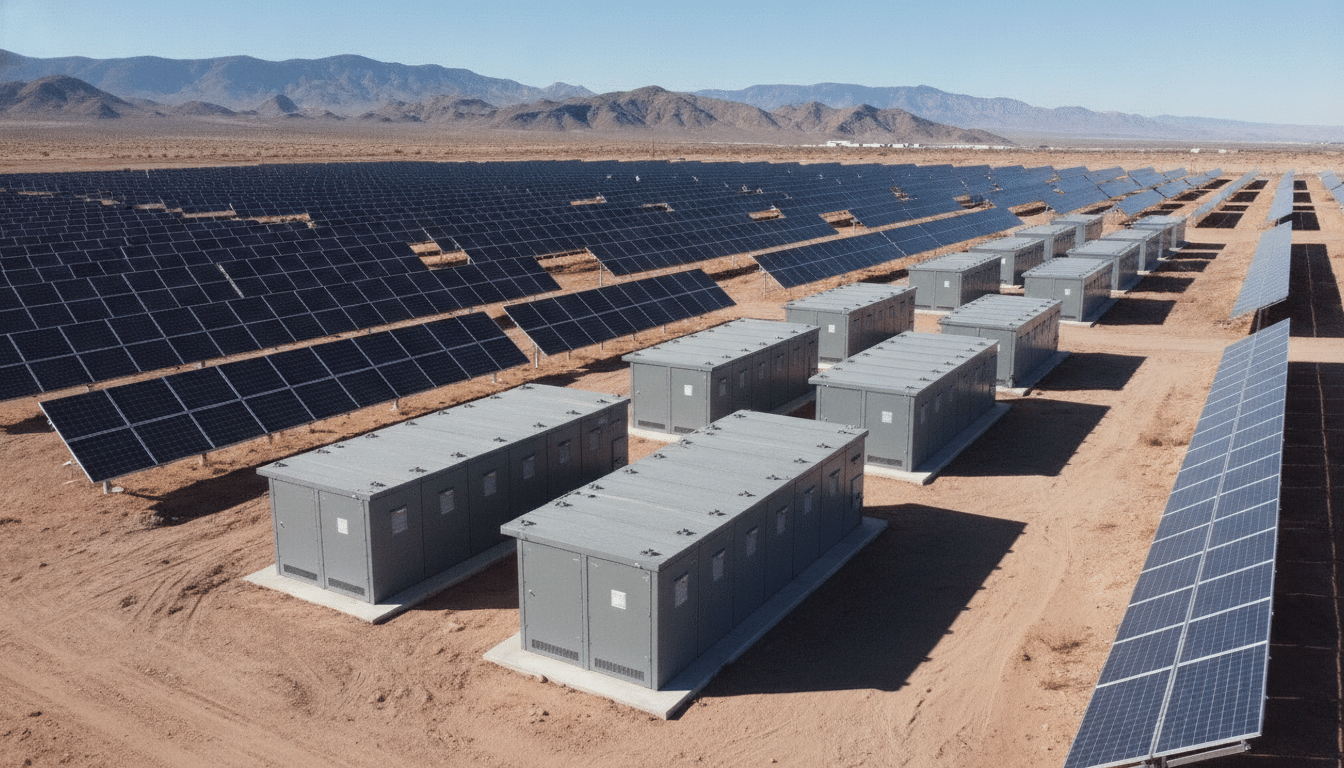
Utility-scale solar made up more than half of the power plants that entered service in the United States during the first half of 2026. Data from the US Energy Information Administration lists 368 utility-scale plants coming online between January and June. Batteries came second. Fossil fuel projects trailed on both project count and capacity.
The headline projects, however, sit oddly with the underlying pattern. Two wind farms top the list, and both took the best part of a decade to build. So the biggest names in the data say little about what developers are starting now.
The largest projects came from an earlier era
SunZia Wind South and SunZia Wind North in New Mexico went online this spring. Together they hold 3,650 megawatts, making them the largest wind farms in the country. Yet SunZia has been in the works for roughly a decade. Meanwhile onshore wind development across the US has dwindled, held back by regulation and public opinion. The project therefore reads as an echo of an earlier boom.
Next comes the Trumbull Energy Center in Ohio, a 900-megawatt combined-cycle gas plant. It forms part of a gas build-out in the PJM Interconnection region, which covers parts of the Mid-Atlantic, Midwest and South. Vineyard Wind, the offshore project near Massachusetts, ranks fourth if SunZia counts as two. It too spent years in development.
Only at fifth place does the list meet the pattern in the wider data. Green River Energy Center in Utah holds 800 megawatts, split evenly between solar and batteries.
Solar and batteries dominate the count
Utility-scale solar led on project numbers with 207 starts. Batteries followed with 95. Gas combustion turbines managed 22, and gas internal combustion engines 21. Onshore wind had nine. Combined-cycle gas, despite a large announced pipeline, brought just three plants online.
Capacity tells a similar story. Solar added 11,458 megawatts, batteries 8,207 megawatts and onshore wind 5,473 megawatts, the last figure resting largely on SunZia. The three main gas categories together contributed 2,707 megawatts. Rooftop and other small-scale solar sit outside the database, so the true solar total is higher still.
Comparisons across technologies need care, though. Solar produces nothing at night, while many gas plants run only a few days or weeks a year to cover peak demand. Nameplate capacity therefore flatters some technologies and understates others.
Eric Gimon, a senior fellow at the San Francisco think tank Energy Innovation, said most of the new solar is small or mid-size. Such projects attract little attention, yet they are turning up almost everywhere, often paired with batteries.
“These kinds of smaller-size projects are just easier to build, and the site possibilities are much more diverse and easy to find,” he said. “The real underlying workhorse is solar plus battery.”
Where the capacity landed
Three states account for about half of the new generating capacity: Texas, New Mexico and Arizona. Texas led, with a mix weighted towards batteries and gas. Batteries came first there at 3,067 megawatts, ahead of utility-scale solar on 2,311 megawatts. Gas turbines and engines contributed 1,154 megawatts.
State policy explains much of that. Texas has prioritised gas and battery construction to shore up grid reliability during demand peaks. Still, the state added no new onshore wind at all in the first half, although it leads the country in installed wind capacity.
Illinois tells a different story. It ranked first on the number of new solar projects with 36, ahead of California on 22 and Texas on 16. Because those projects are small, Illinois barely reached the top ten for capacity. State laws encouraging modest-sized solar are clearly delivering finished plants.
Small entries and the pipeline ahead
The smallest projects repay a look too. Four megawatts of hydropower came online at the Byllesby Dam in Dakota County, Minnesota, replacing turbines that have run on the Cannon River since 1910. In Ohio, meanwhile, Columbus city government started a 2.8-megawatt biomass plant fuelled by methane captured at a sewage works.
The EIA’s list of planned plants points to more utility-scale solar, and to a wave of gas plants in the final years of this decade. Sizing either wave is hard, because electricity demand growth remains uncertain and nobody knows how much of it AI data centres will absorb, as Inside Climate News reported. For now, the built record is the firmer guide.