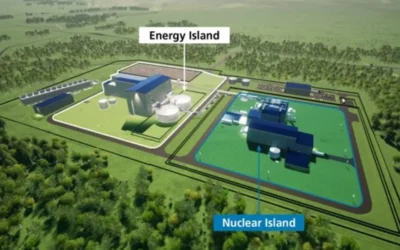
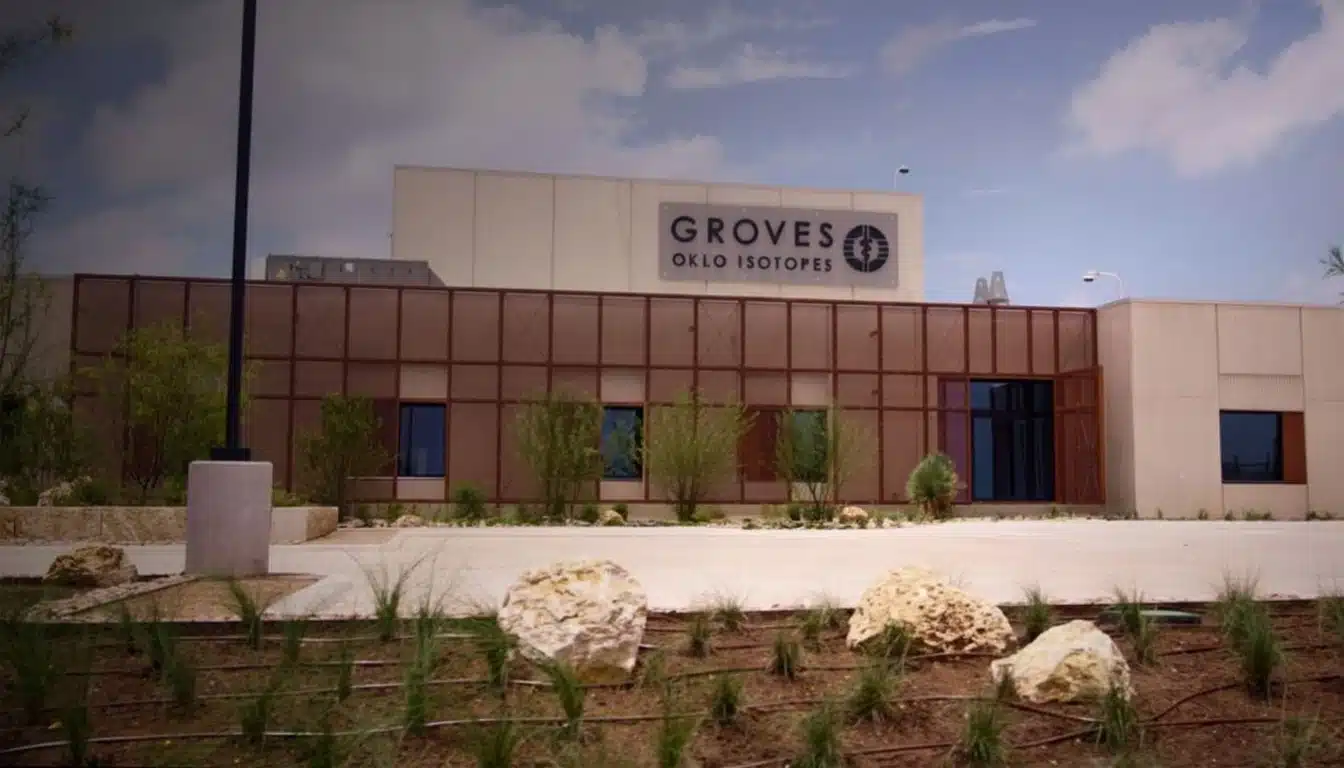
A low-power test reactor south of Austin has sustained its first chain reaction, giving Oklo physical proof of its engineering after two years of soaring valuations and regulatory setbacks.
Oklo has spent two years as one of the most watched names in next-generation nuclear power. Until this week, however, the company had never split an atom of its own. That changed on Thursday, when Oklo said its Groves Isotope Test Reactor had sustained a chain reaction. The low-power unit sits on private land south of Austin, Texas, part of a Department of Energy testing programme.
Engineers call the moment criticality. A reactor reaches it when the fission chain becomes self-sustaining, so each split atom reliably triggers the next. Although the step is necessary for any nuclear developer, it sits a long way from a working power station. Still, for a firm whose market value once neared $24 billion, it is the first physical proof that its engineering holds up.
What Oklo built in Texas
Groves stands in rural Caldwell County and generates no electricity. It demonstrates the technology behind Oklo’s medical isotope business, which the firm hopes will bring in early revenue. Hospitals use these short-lived radioactive materials constantly for cancer scans and treatments. Oklo says the work also helps its electricity plans, because both lines of business lean on the same suppliers and the same engineers.
Fuel gives one example. Oklo bought the low-enriched uranium for Groves from Framatome, a French reactor-fuel company, on commercial terms. Construction finished in under a year on a greenfield plot. As a result, the company handled excavation, civil works and component procurement itself.
How the milestone compares with rivals
Oklo is the fifth of ten companies in the Department of Energy’s Reactor Pilot Program to reach criticality in the past two months, according to Canary Media, which reported the announcement first. The other four did their work at federal facilities or on public land. Oklo’s project, meanwhile, ran on private ground from the start.
Jacob DeWitte, co-founder and chief executive of Oklo, said the company managed “full-scale civil excavation and construction, commercially procured fuel and all major components, and developed its operating programs in-house”. He added: “Reaching criticality in less than a year is an incredible milestone for our team.”
The regulatory gap that remains
Regulators rejected Oklo’s licence application in 2022, a setback that stalled its power ambitions for years. The company has yet to resubmit paperwork for its 75-megawatt liquid-sodium-cooled power reactors. In March, however, the Nuclear Regulatory Commission gave Oklo its first licence to operate a medical isotope reactor. So the isotope route now has regulatory cover that the power reactors still lack.
Only two advanced nuclear startups, TerraPower and Kairos, are actively building reactors in the United States. Oklo is preparing a site near the Idaho National Laboratory for its first small modular reactor. It can’t touch the reactor itself yet, though, because permission hasn’t arrived.
Political backing in Texas
Greg Abbott, the governor of Texas, said the project would lay groundwork for expanded “isotope production for critical medical therapies and reinforce Texas’ leadership in nuclear innovation”.
“Texas is leading America’s nuclear renaissance by advancing the technologies that will power innovation and strengthen our nation’s future,” said Abbott, a Republican seeking re-election this year. State backing carries weight here, because siting rules and construction permits shape how quickly reactors go up.
What the Groves result actually proves
A sustained chain reaction in a small test unit tells investors that Oklo can build and operate real hardware. It says much less about whether the firm can deliver 75-megawatt power reactors onto a grid. Those machines run hotter, cost far more and face heavier regulation. For now, therefore, the Texas result reads as a credibility fix for a company long judged on promises.