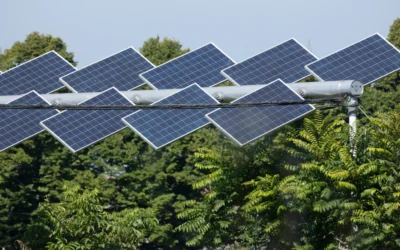
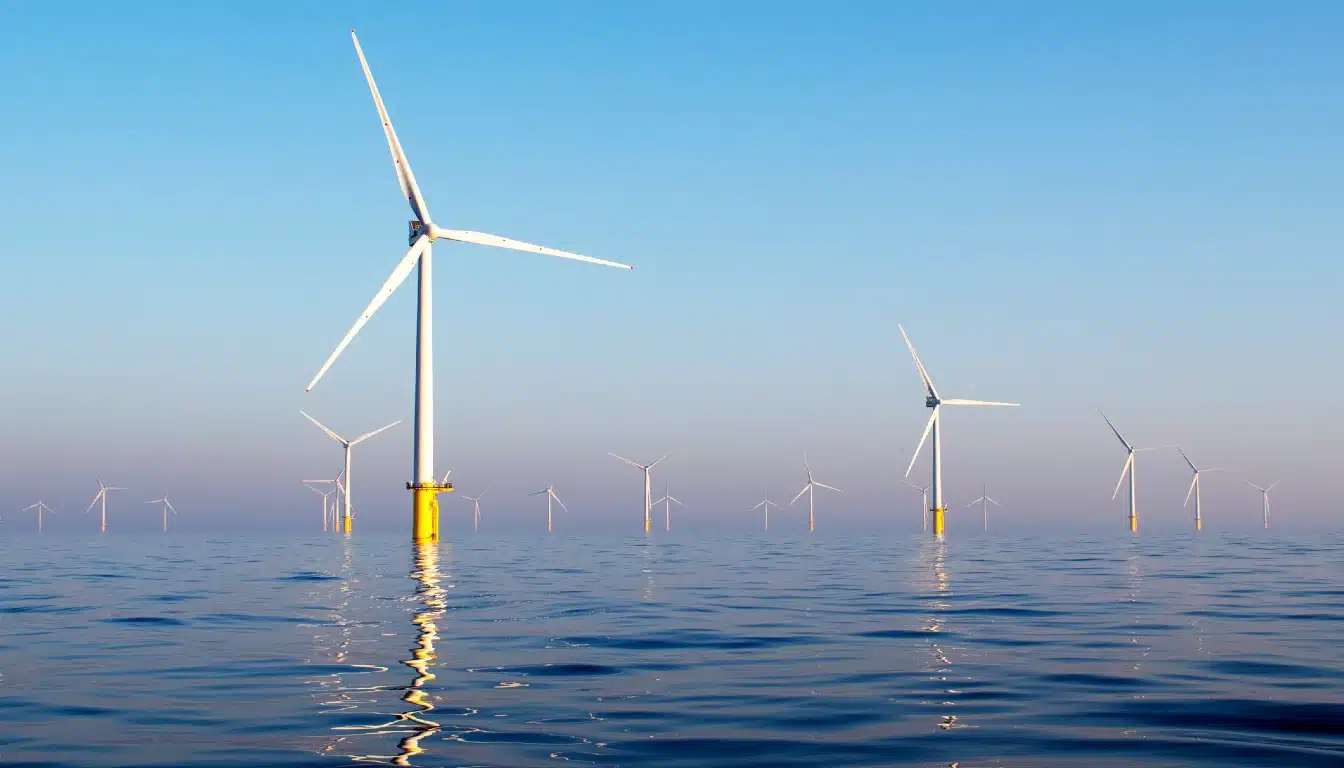
Britain wasted more renewable electricity in 2025 than ever before. Industry analysis from Montel EnAppSys recorded over 10 terawatt-hours of curtailed wind and solar generation. That figure reflects a grid straining under the weight of its own expansion. When generation outpaces what transmission infrastructure can carry, operators switch generation off. The electricity simply disappears.
The scale of that waste is now shaping a new category of infrastructure investment. Long-duration energy storage is drawing capital, engineering talent, and increasingly, the attention of insurers asked to price technology with little operating history.
Liquid Air and the Carrington Project
Highview Power is among the companies working to commercialise long-duration storage in Britain. Its Carrington project in Greater Manchester involves £300 million in investment. The facility is designed to store 300 megawatt-hours of electricity and deliver 50 megawatts for six hours continuously.
The technology works by using surplus renewable power to cool air into liquid form. That liquid air is then reheated later to drive a turbine when electricity is needed. Highview says Carrington is the first commercial-scale project of its kind in Britain.
The project delivers in two phases. The first phase is a stability island, which supplies inertia, short-circuit support, and voltage control to the local grid. These are services that thermal generation has historically provided. The second phase is the long-duration storage system itself.
Highview has also advanced plans for a larger facility at Hunterston in Scotland. According to the company, the Hunterston site is around eight times the size of Carrington. It would provide approximately 3.2 gigawatt-hours of storage and deliver 300 megawatts for more than 12 hours.
Insurers Step Into Unfamiliar Territory
For the insurance market, these projects present a specific challenge. Matt Cullum, head of UK construction at Willis, says underwriters depend on past losses to price risk. That data is thin when projects have almost no operating history to draw from.
In that environment, brokers do more than arrange coverage. Cullum says specialist engineering input becomes essential, particularly where projects include battery or hydrogen storage components. Insurers want detailed scrutiny of production methods, storage pressures, material choices, cell chemistry, and fire protection systems. Engineering expertise bridges the gap that limited claims history creates.
Willis began working on the Carrington project nearly two years before financial close. That early engagement allowed engineers and insurers to review the project together before key design decisions were fixed. Cullum also points to owner-controlled insurance programmes as one way to maintain continuity across the supply chain. If a contractor fails, the policy remains in place. The project can continue with replacement contractors. Lenders tend to value that feature.
Investors Want Certainty Before They Commit
Dominic Walters of Highview Power identifies a familiar tension in infrastructure finance. Investors say they want innovation. They consistently prefer certainty. Projects such as Carrington and Hunterston need insurance structures that satisfy lenders before financial close is possible.
That makes early-stage insurance engagement a commercial necessity. The structure of the insurance itself is standard. The way it is applied to technology with no comparable track record is new.
Grid Constraints Reach Beyond Energy
Walters argues the consequences of grid constraints extend well beyond wasted electricity. Grid limitations already restrict development in data centres, housing, and life sciences facilities. Britain’s economic growth depends on grid capacity. Expanding clean power at scale requires a grid that can absorb and distribute it effectively.
The economics of storage investment are tied directly to curtailment volumes. Every terawatt-hour switched off represents both a cost and a case for adding storage capacity. Projects such as Carrington and Hunterston are designed to convert intermittent wind and solar generation into a more dependable grid resource.
The insurance and finance frameworks being developed around these projects are as significant as the engineering. Long-duration storage is a young market. The commercial structures taking shape around it will influence how quickly it scales.