A wave of long-term green ammonia supply deals is reshaping how heavy industries approach decarbonisation, with fertiliser producers, shipping companies, and chemical manufacturers committing to offtake agreements that lock in low-carbon feedstocks years in advance. These industrial decarbonisation agreements mark a departure from the speculative project announcements that dominated the sector in previous years, pointing instead toward commercial commitments with defined delivery timelines.
Why Green Ammonia Is Gaining Commercial Traction
Green ammonia, produced by combining green hydrogen with nitrogen using renewable electricity, offers a pathway to decarbonise sectors that cannot easily electrify. Ammonia is both a critical feedstock for nitrogen fertilisers and an emerging zero-carbon fuel for maritime shipping. The International Energy Agency has identified ammonia as one of the key hydrogen carriers for long-distance energy trade, given its higher energy density compared to liquid hydrogen and its established global shipping infrastructure.
The commercial logic behind supply deals is straightforward. Project developers need revenue certainty to secure project financing. Industrial buyers need supply certainty to justify retrofitting or replacing existing plant. Long-term offtake contracts satisfy both requirements simultaneously, which is why they are increasingly the instrument of choice for moving green ammonia from pilot scale to commercial deployment.
The Structural Shift Away from Announcements
The green hydrogen and ammonia sector spent much of the early 2020s generating headline project announcements without corresponding financial close. According to the IEA’s 2023 Global Hydrogen Review, less than 5 per cent of announced hydrogen projects had reached a final investment decision by mid-2023. The gap between ambition and execution became a credibility problem for the sector.
Supply agreements change that dynamic. When an industrial buyer signs a multi-year offtake contract, it creates a bankable revenue stream that project developers can present to lenders. This is the mechanism by which green ammonia projects are beginning to move through the financing pipeline rather than stalling at the announcement stage. The shift is incremental, but it is directionally significant for the broader industrial decarbonisation agenda.
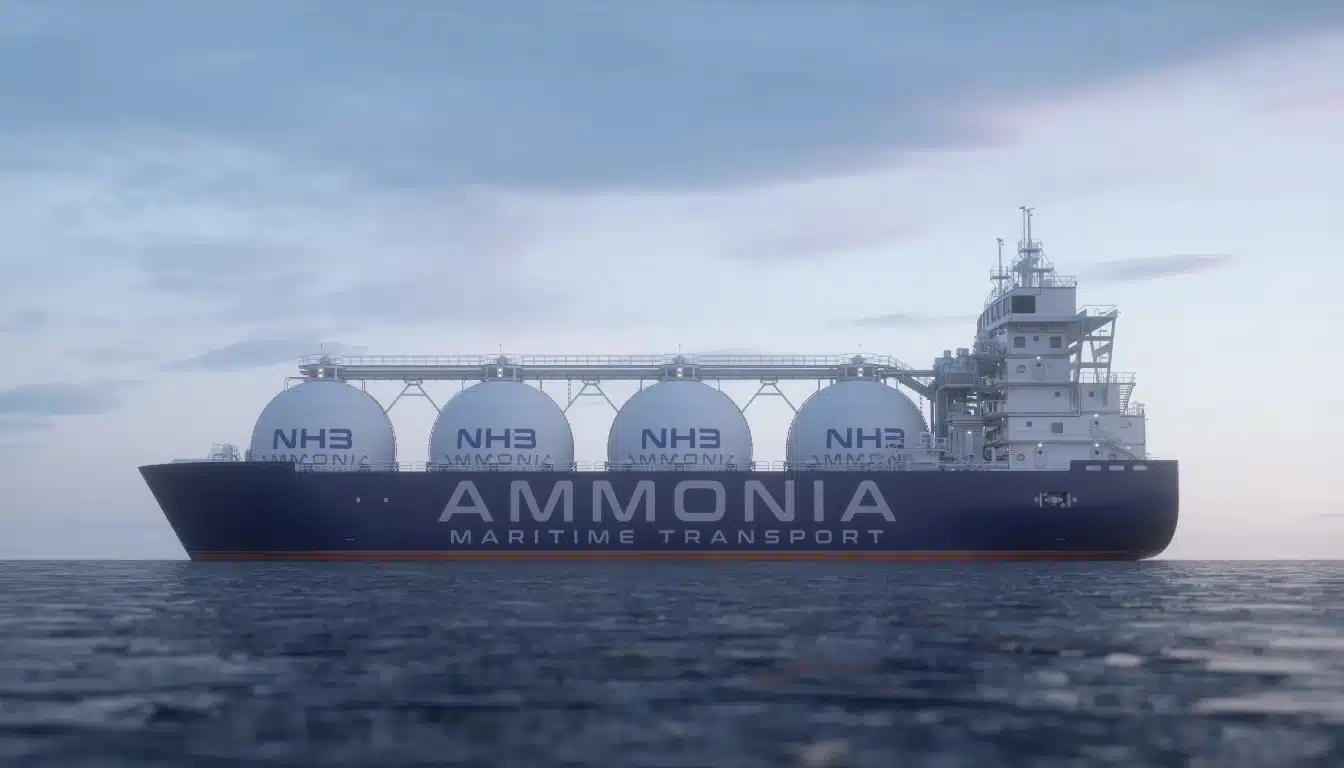
Shipping is one of the clearest near-term markets. The International Maritime Organization’s revised greenhouse gas strategy, adopted in 2023, targets net-zero emissions from international shipping by or around 2050. Ammonia is among the leading candidate fuels, alongside methanol and hydrogen, for vessels that cannot run on battery power over long distances. Shipping companies that secure green ammonia supply now are positioning themselves ahead of tightening fuel regulations.
Policy Frameworks Are Catching Up
Regulatory developments on both sides of the Atlantic are accelerating commercial interest. The European Union’s Hydrogen and Decarbonised Gas Markets Directive and the associated delegated acts on renewable fuels of non-biological origin set specific criteria for what qualifies as green hydrogen, and by extension green ammonia. These definitions matter enormously for offtake agreements, because buyers need assurance that the product they purchase will meet regulatory thresholds for carbon accounting purposes.
In the United States, the Inflation Reduction Act’s clean hydrogen production tax credit, known as the 45V provision, provides up to three dollars per kilogram for hydrogen produced with near-zero lifecycle emissions. Green ammonia projects that can access this credit gain a meaningful cost advantage, which in turn improves the economics of supply agreements for both parties. The precise implementation rules for 45V, particularly around additionality and temporal matching of renewable electricity, remain a point of active debate, but the direction of policy support is clear.
Investment Implications and Remaining Risks
For investors, the emergence of contracted supply pipelines represents a maturation of the green ammonia market. Projects with signed offtake agreements carry a different risk profile from those relying on merchant price exposure. That distinction is becoming increasingly important as capital allocators apply greater scrutiny to green hydrogen and ammonia investments following a period of inflated expectations.
Cost remains the central challenge. Green ammonia is currently more expensive to produce than conventional ammonia derived from natural gas. The cost gap will narrow as electrolyser manufacturing scales and renewable electricity prices continue to fall, but the timeline for full cost parity depends heavily on geography, grid conditions, and policy support. Projects in regions with abundant cheap renewables, including parts of the Middle East, Australia, and Chile, are best positioned to close that gap first.
The next 24 months will be a critical test. Projects with signed supply agreements must now convert those contracts into financial close and begin construction. If a meaningful share of contracted projects reach that milestone, it will confirm that green ammonia has moved from a promising concept into a functioning industrial supply chain. If delays accumulate, the credibility gap that plagued earlier project announcements will reassert itself, and the pace of industrial decarbonisation in hard-to-abate sectors will slow accordingly.